STARS Summit at Dubai Future Week Explores Interdisciplinary Frontiers

 London
 7 °C

 Manchester
 3 °C
 Glasgow
 5 °C
 Dublin
 10 °C
 Belfast
8 °C
 Washington
19 °C
 Denver
5 °C
 Atlanta
13 °C
 Dallas
22 °C
 Houston Texas
25 °C
 New Orleans
 23 °C
 El Paso
 18 °C
 Phoenix
 18 °C
 Los Angeles
18 °C
San Diego
20 °C
San Francisco
11 °C
Chicago
21 °C
Minneapolis
9 °C
Seattle
5 °C
Portland
 6 °C
Salt Lake City
4 °C
Las Vegas
12 °C
Miami
27 °C
Jacksonville
25 °C
San Antonio
21 °C
Bermuda
23 °C
Nassau
17 °C
Iqaluit
 -13 °C
Yellowknife
-6 °C
Anchorage
0 °C
Fairbanks
-16 °C
Barrow
-3 °C
Calgary
-4 °C
Edmonton
23 °C
Winnipeg
4 °C
Goose Bay
15 °C
Halifax
18 °C
Boston
18 °C
Ottawa
15 °C
Toronto
13 °C
Detroit
18 °C
Cleveland
20 °C
New York
18 °C
Baltimore
18 °C
Philadelphia
19 °C
Nuuk (Godthåb)
-7 °C
Hong Kong
20 °C
Singapore
 26 °C
Melbourne
25 °C
Canberra
15 °C
Adelaide
26 °C
Darwin
28 °C
Perth
17 °C
Fort Worth
21 °C
Honolulu
 24 °C
Sydney
20 °C
Johannesburg
20 °C
Dubai
28 °C
Mumbai
26 °C
Zürich
7 °C
Tokyo
9 °C
Seoul
-6 °C
Delhi
18 °C
Beijing
-5 °C
Riyadh
21 °C
Prague
3 °C
Pennsylvania
17 °C
Valletta
19 °C
Manama
25 °C
Warsaw
2 °C
Stockholm
1 °C
The third day of the Science, Technology, Arts, and Research (STARS) Summit at Dubai Future Week 2026 examined the convergence of engineering, creativity, and scientific research. Held at Emirates Towers, the event featured discussions on bio-inspired robotics, brain-computer interfaces, and lunar exploration, emphasizing interdisciplinary collaboration to address future challenges.
The third day of the Science, Technology, Arts, and Research (STARS) Summit at Dubai Future Week 2026 focused on the intersection of scientific research, engineering, and creative disciplines. Hosted by the Dubai Future Foundation at Emirates Towers, the summit convened researchers, engineers, and creative thinkers to discuss how interdisciplinary collaboration can drive innovation and expand possibilities for humanity.
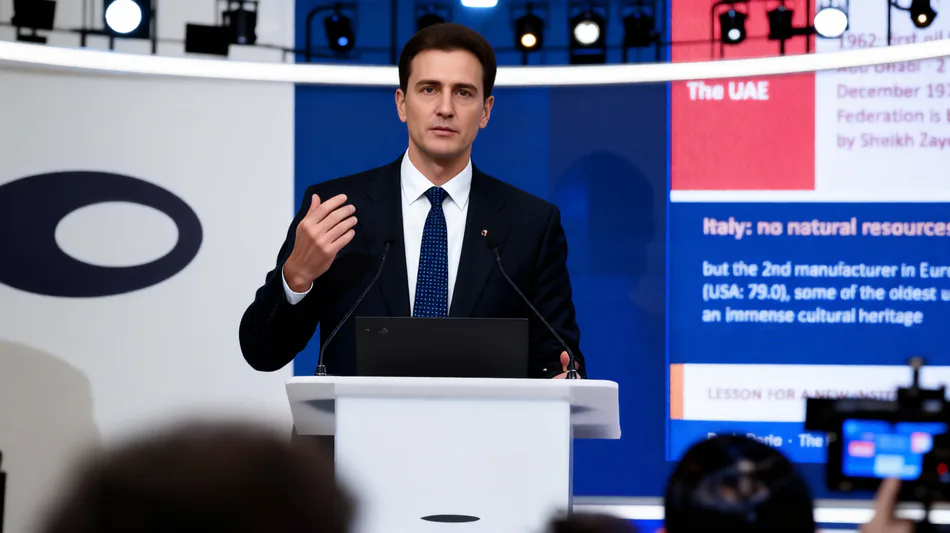
Professor Paolo Dario, Chief Scientist at the Dubai Future Foundation, delivered a keynote address drawing on his 35 years of experience in research and institution building. He traced the development of The Bio Robotics Institute into an interdisciplinary hub employing more than 370 people, using it as a case study for nurturing talent and fostering long-term collaboration.
Dario introduced the concept of the "renaissance engineer," advocating for a shift from traditional STEM education to STEAM, which integrates arts and creative thinking into scientific fields. He also discussed "cathedral thinking," a framework for building institutions with visions that extend beyond individual careers and generations. His remarks emphasized the necessity of mentorship, inclusive research environments, and strong ties between academia and industry to sustain scientific progress.
The summit’s programming included sessions addressing specific technological frontiers. In "Same Machine, Opposite Questions: Art vs. Engineering in Robotic Form," panelists explored how artists and engineers approach the design of bio-inspired robots differently. The discussion highlighted how biological systems can inspire machines capable of navigating complex environments, potentially overcoming limitations inherent in conventional robotic technologies.
Another session, "Mind Meets Machine: The Future of Neural Technology," examined advances in brain-computer interfaces and their potential to transform human-technology interaction. Experts addressed the ethical considerations surrounding neural technologies, stressing the importance of responsible innovation as these capabilities develop.
Hamad Almarzooqi of the Space Robotics Department at the Mohammed Bin Rashid Space Centre led a session on lunar exploration titled "Beyond Rashid: The Science and Technology Shaping the Future of Lunar Exploration." Drawing on the UAE's Rashid Rover programme, Almarzooqi noted significant gaps in current lunar knowledge. He pointed out that despite decades of exploration, lunar rovers have traveled a combined distance of approximately 140 kilometers. He emphasized the need for more frequent missions and advanced, cost-effective space technologies to support sustained human exploration of the lunar surface.
In the final session, "New Planetary Imaginaries: Design Fiction as a Research Method," worldbuilder and filmmaker Liam Young explored how storytelling and speculative design can challenge assumptions about the future. Through his project Planet City, which imagines a scenario where 10 billion people live in a single city, Young presented an alternative vision of humanity's relationship with the planet. The presentation featured imagery of vast algae farms, solar installations, mining landscapes, and underwater environments, examining the intersection of climate change, artificial intelligence, and space exploration. Young encouraged audiences to use imagination not merely to predict outcomes but to question existing systems and envision more hopeful futures.
J.Gong--SG