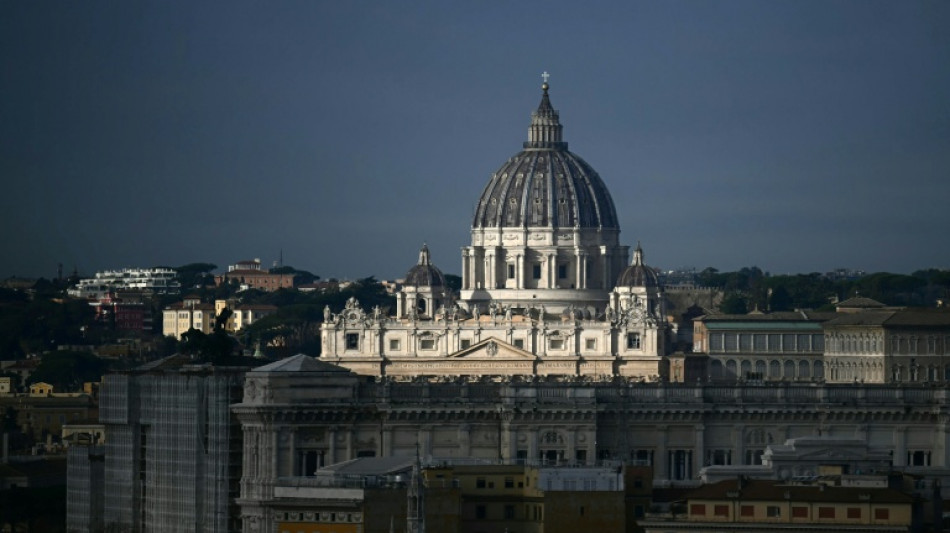
St Peter's Basilica gets terrace cafe, translated mass for 400th birthday / Photo: © AFP/File

 London
 22 °C
22 °C

 Manchester
 16 °C
16 °C
 Glasgow
 20 °C
20 °C
 Dublin
17 °C
Dublin
17 °C
 Belfast
15 °C
Belfast
15 °C
 Washington
25 °C
Washington
25 °C
 Denver
 16 °C
16 °C
 Atlanta
 25 °C
25 °C
 Dallas
 29 °C
29 °C
 Houston Texas
26 °C
Houston Texas
26 °C
 New Orleans
28 °C
New Orleans
28 °C
 El Paso
24 °C
El Paso
24 °C
 Phoenix
33 °C
Phoenix
33 °C
 Los Angeles
19 °C
San Diego
20 °C
San Francisco
14 °C
Chicago
22 °C
Minneapolis
21 °C
Seattle
16 °C
Portland
17 °C
Salt Lake City
21 °C
Las Vegas
27 °C
Miami
28 °C
Jacksonville
26 °C
San Antonio
25 °C
Bermuda
Los Angeles
19 °C
San Diego
20 °C
San Francisco
14 °C
Chicago
22 °C
Minneapolis
21 °C
Seattle
16 °C
Portland
17 °C
Salt Lake City
21 °C
Las Vegas
27 °C
Miami
28 °C
Jacksonville
26 °C
San Antonio
25 °C
Bermuda
 27 °C
Nassau
20 °C
Iqaluit
5 °C
Yellowknife
10 °C
Anchorage
27 °C
Nassau
20 °C
Iqaluit
5 °C
Yellowknife
10 °C
Anchorage
 15 °C
Fairbanks
17 °C
Barrow
13 °C
Calgary
12 °C
Edmonton
24 °C
Winnipeg
15 °C
Goose Bay
12 °C
Halifax
13 °C
Boston
14 °C
Ottawa
15 °C
Toronto
20 °C
Detroit
22 °C
Cleveland
22 °C
New York
22 °C
Baltimore
25 °C
Philadelphia
20 °C
Nuuk (Godthåb)
7 °C
Hong Kong
31 °C
Singapore
32 °C
Melbourne
26 °C
Canberra
8 °C
Adelaide
11 °C
Darwin
27 °C
Perth
21 °C
Fort Worth
28 °C
Honolulu
26 °C
Sydney
14 °C
Johannesburg
15 °C
Fairbanks
17 °C
Barrow
13 °C
Calgary
12 °C
Edmonton
24 °C
Winnipeg
15 °C
Goose Bay
12 °C
Halifax
13 °C
Boston
14 °C
Ottawa
15 °C
Toronto
20 °C
Detroit
22 °C
Cleveland
22 °C
New York
22 °C
Baltimore
25 °C
Philadelphia
20 °C
Nuuk (Godthåb)
7 °C
Hong Kong
31 °C
Singapore
32 °C
Melbourne
26 °C
Canberra
8 °C
Adelaide
11 °C
Darwin
27 °C
Perth
21 °C
Fort Worth
28 °C
Honolulu
26 °C
Sydney
14 °C
Johannesburg
 18 °C
Dubai
39 °C
Mumbai
31 °C
Zürich
29 °C
Tokyo
25 °C
Seoul
26 °C
Delhi
34 °C
Beijing
27 °C
Riyadh
46 °C
Prague
23 °C
Pennsylvania
21 °C
Valletta
32 °C
Manama
42 °C
Warsaw
28 °C
Stockholm
18 °C
18 °C
Dubai
39 °C
Mumbai
31 °C
Zürich
29 °C
Tokyo
25 °C
Seoul
26 °C
Delhi
34 °C
Beijing
27 °C
Riyadh
46 °C
Prague
23 °C
Pennsylvania
21 °C
Valletta
32 °C
Manama
42 °C
Warsaw
28 °C
Stockholm
18 °C
Visitors to St Peter's Basilica will be able to follow mass in 60 languages and enjoy a coffee on a newly opened terrace as part of plans unveiled Monday by the Vatican.
The changes, which also include a new real-time booking app to help regulate the crowds, are among several initiatives marking 400 years since the consecration of the world's largest church on November 18, 1626.
Currently access to the terrace of the basilica, the centre of global Catholicism located in Vatican City, is strictly limited.
"The entire terrace of the basilica will be accessible," compared with only one third of it today, Cardinal Mauro Gambetti, the basilica's Archpriest, told a press conference.
A current "refreshment area" will be approximately doubled to around 100 square metres, he said.
The Vatican had previously sought to play down reports of a cafe on the terrace, which had sparked anger about the potential commercialisation of a sacred place.
Exhibitions will also be staged on the terrace, including for children, relating to the building's history, construction and maintenance.
Some 20,000 people a day visit the basilica, a jewel of Renaissance architecture, and managing the numbers is a major challenge.
Opening up space on the terrace should help reduce crowds in the basilica "and foster greater contemplation inside", Gambetti said.
- Real-time monitoring -
The Vatican also Monday launched a new app for liturgies in the basilica, which will allow pilgrims to follow mass by Pope Leo XIV in 60 languages via their smartphones.
Visitors will scan a QR code to access a dedicated web page providing real-time audio and text translations, using an AI-powered system developed by Rome-based firm Translated.
There will also be a new real-time booking system for access to the basilica, fuelled by a network of sensors that monitor how many people are inside.
The Vatican also presented its "Beyond the Visible" project, which created a three-dimensional digital model of the entire complex.
Conducted with oil company Eni, it will allow real-time monitoring of even the tiniest movements in the building or its foundations.
The system has confirmed the general good state of the basilica, and will provide information to "allow us to prevent any future issues", said Annalisa Muccioli, head of research and technological innovation at Eni.
The basilica is a place of pilgrimage as it contains the tomb of St Peter, one of the 12 disciples of Jesus Christ and the first pope.
The first stone for the basilica, which replaced an older one on the site, was laid by Pope Julius II in 1506, and it was completed in 1626.
Q.Min--SG