DeSantis Warns GOP of 'Extinction-Level Event' After Midterm Defeats

 London
 9 °C

 Manchester
10 °C
 Glasgow
 4 °C
 Dublin
11 °C
 Belfast
9 °C
 Washington
21 °C
 Denver
12 °C
 Atlanta
21 °C
 Dallas
 23 °C
 Houston Texas
 25 °C
 New Orleans
 25 °C
 El Paso
23 °C
 Phoenix
25 °C
 Los Angeles
24 °C
San Diego
23 °C
San Francisco
19 °C
Chicago
14 °C
Minneapolis
 9 °C
Seattle
13 °C
Portland
14 °C
Salt Lake City
11 °C
Las Vegas
21 °C
Miami
26 °C
Jacksonville
25 °C
San Antonio
25 °C
Bermuda
23 °C
Nassau
17 °C
Iqaluit
 -4 °C
Yellowknife
0 °C
Anchorage
7 °C
Fairbanks
-1 °C
Barrow
-5 °C
Calgary
8 °C
Edmonton
18 °C
Winnipeg
8 °C
Goose Bay
17 °C
Halifax
18 °C
Boston
 20 °C
Ottawa
 19 °C
Toronto
 17 °C
Detroit
17 °C
Cleveland
17 °C
New York
19 °C
Baltimore
19 °C
Philadelphia
19 °C
Nuuk (Godthåb)
-2 °C
Hong Kong
25 °C
Singapore
27 °C
Melbourne
26 °C
Canberra
14 °C
Adelaide
16 °C
Darwin
30 °C
Perth
17 °C
Fort Worth
23 °C
Honolulu
 26 °C
Sydney
21 °C
Johannesburg
17 °C
Dubai
30 °C
Mumbai
28 °C
Zürich
5 °C
Tokyo
13 °C
Seoul
11 °C
Delhi
18 °C
Beijing
5 °C
Riyadh
24 °C
Prague
3 °C
Pennsylvania
18 °C
Valletta
19 °C
Manama
29 °C
Warsaw
2 °C
Stockholm
6 °C
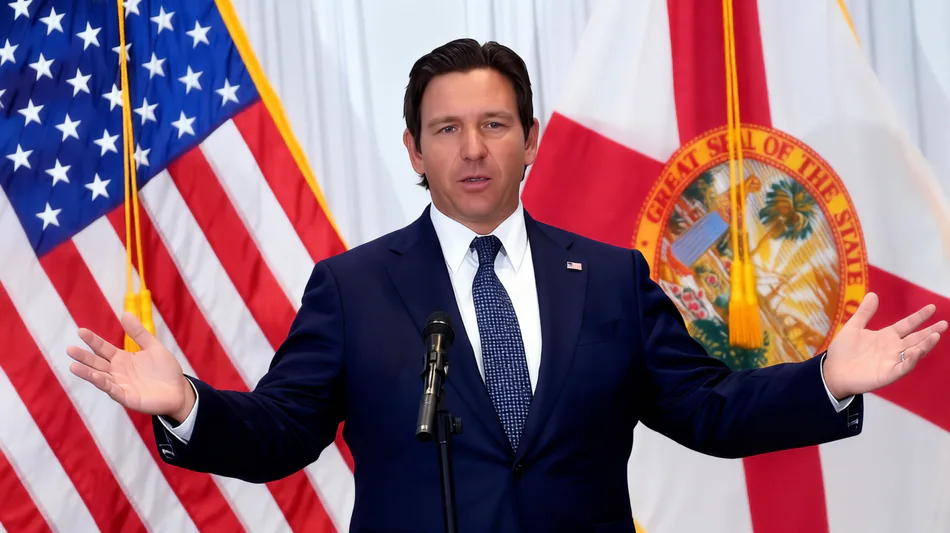
Outgoing Florida Governor Ron DeSantis has issued a stark warning to the Republican Party, describing recent midterm election results as an "extinction-level event" for the organization. In a sharp critique of President Donald Trump’s administration, DeSantis attributed significant electoral losses to the ongoing conflict with Iran and the historic defeat in Texas, while signaling his own potential return to presidential politics.
Outgoing Florida Governor Ron DeSantis has launched a severe critique of the Republican Party’s trajectory following its significant losses in the midterm elections, characterizing the results as an existential threat to the GOP’s national viability. DeSantis attributed the electoral defeat primarily to President Donald Trump’s decision to engage in a war with Iran and the loss of key political ground in Texas, while also signaling his own potential return to presidential politics in 2028.
Speaking at a press conference in Tallahassee on Wednesday, DeSantis described the election outcome as "close to an extinction-level event for Republicans in many parts of the country." He specifically highlighted the Democratic victories in both the Texas governor and Senate races, referring to the latter as "the crown jewel of Republican politics." DeSantis argued that the loss of Texas would have long-term consequences for the party’s national standing.
"Let's just be clear, that is going to hurt, not just for the next two years, that's something that can reverberate for the next decade or more," DeSantis said. "And if the Republican Party doesn't have Texas as an anchor, then we are not going to be viable nationally going forward."
The governor’s comments followed a pattern of criticism that began before the final results were tallied. In a podcast interview with Stephen A. Smith earlier in the week, DeSantis accused the Trump administration of "gaslighting" voters regarding the economic impact of the conflict with Iran. He noted that rising gas prices were directly linked to the war and argued that refusing to acknowledge this reality was alienating working-class voters.
"Gas is higher. It hurts working-class people, and it's higher because of this conflict. That's just a fact," DeSantis stated. "If you can't admit that to voters, then you're gaslighting them, and they're not gonna listen to you on other things." He characterized the war as a "big drag" on the party, suggesting that had it been resolved quickly, similar to the administration’s operation in Venezuela, it might not have become a central issue.
DeSantis also pointed to what he viewed as a breach of trust regarding foreign policy. "[Trump] obviously ran saying he wasn't going to do a Middle East war. They did," DeSantis said. "So we have some of our voters who've checked out because they're like, 'I didn't want any more Middle East wars, and now we're doing it.'"
The electoral data supported DeSantis’s pessimistic outlook. Democrats are projected to secure at least 54 Senate seats compared to the Republicans’ 44, while also winning at least 228 House seats to the GOP’s 139. In Texas, Democrat James Talarico defeated Ken Paxton, Trump’s handpicked candidate for the U.S. Senate race. This marked the first time a Democrat was elected to the Senate from Texas since 1988.
DeSantis took to social media early Wednesday morning to predict further losses. "Dems will get 55 Senate seats and 250+ House seats," he posted on X. He warned that the current trajectory made it unlikely for Republicans to recapture Congress in 2028, stating, "Might not have a shot at Senate control until 2032." He added that a prolonged war would undermine President Trump’s ability to govern and make the next election cycle increasingly difficult for the GOP.
The midterm results also exposed fractures within the Republican coalition. Vice President JD Vance conceded in a lengthy post that voters who had supported him in 2024 had shifted toward Democrats in protest of the Iran war. Additionally, Darline Graham, Trump’s choice to succeed Senator Lindsey Graham, lost her bid in South Carolina.
Despite the broader losses, DeSantis noted that Florida remained a Republican stronghold. With defeats in gubernatorial races in Texas, Ohio, and Georgia, Florida became the only one of the nation’s ten most populous states with a Republican governor. His successor, Byron Donalds, narrowly defeated Democrat David Jolly to become the state’s first Black governor, securing roughly 50 percent of the vote compared to Jolly’s 48.7 percent. This result stood in stark contrast to DeSantis’s own 2022 reelection, which he won by a 19-point margin.
DeSantis’s harsh assessment has immediately reignited speculation about his political future. Having dropped out of the 2024 presidential race after finishing second in the Iowa caucuses, his current comments have led many to view him as a potential alternative to Vice President Vance for the 2028 nomination. Prediction market Kalshi reported that DeSantis’s odds of winning the GOP nomination jumped overnight by more than 14 points to 19 percent, placing him behind Vance at 31 percent and Secretary of State Marco Rubio at 22 percent.
Conservative commentator Ben Shapiro, a Florida resident who supported DeSantis in 2024, stated that "Ron is going to run." He argued that if DeSantis waits another four years, he risks losing relevance. "Governor DeSantis in Florida who already ran once, if he waits another four years, then he's not really relevant," Shapiro said.
Republican strategists told the Daily Mail that the party faces a period of intense soul-searching regarding its strategy ahead of the 2026 midterms and the 2028 presidential contest. With Trump term-limited, the debate centers on whether MAGA-aligned candidates remain viable without the president’s direct endorsement. DeSantis’s criticism positions him as a potential figure who can separate his brand from Trump’s.
Trump acknowledged in a Truth Social post late on election night that candidate quality was an issue that his campaigning could not fully overcome. However, many Republicans have pointed directly at the Iran war as the primary cause of the "blue tsunami." One strategist predicted that "we're gonna have some heads on some stakes in the next coming days and weeks" as the administration seeks to assign blame for the losses.
Despite the internal turmoil, the race for 2028 is already underway. Strategists noted that whoever enters the contest first will have a significant advantage in distinguishing their platform from the current administration’s record.
A.Uhm--SG