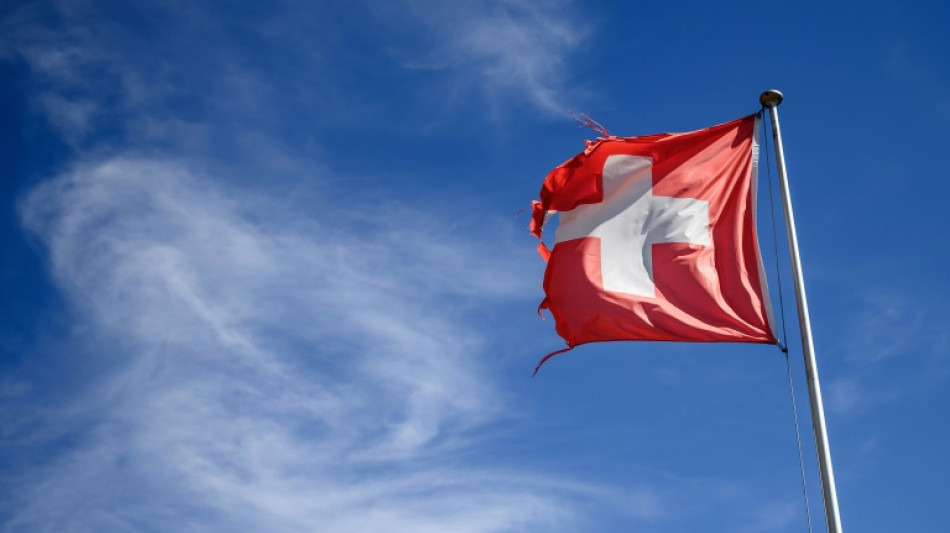
Swiss reject plan to toughen neutrality / Photo: © AFP/File

 London
 20 °C
20 °C

 Manchester
 17 °C
17 °C
 Glasgow
23 °C
Glasgow
23 °C
 Dublin
 15 °C
15 °C
 Belfast
 15 °C
15 °C
 Washington
 18 °C
18 °C
 Denver
23 °C
Denver
23 °C
 Atlanta
23 °C
Atlanta
23 °C
 Dallas
29 °C
Dallas
29 °C
 Houston Texas
31 °C
Houston Texas
31 °C
 New Orleans
29 °C
New Orleans
29 °C
 El Paso
25 °C
El Paso
25 °C
 Phoenix
30 °C
Phoenix
30 °C
 Los Angeles
23 °C
San Diego
23 °C
San Francisco
15 °C
Chicago
20 °C
Minneapolis
16 °C
Seattle
11 °C
Portland
12 °C
Salt Lake City
23 °C
Las Vegas
27 °C
Miami
30 °C
Jacksonville
27 °C
San Antonio
30 °C
Bermuda
30 °C
Nassau
18 °C
Iqaluit
4 °C
Yellowknife
4 °C
Anchorage
7 °C
Fairbanks
0 °C
Barrow
Los Angeles
23 °C
San Diego
23 °C
San Francisco
15 °C
Chicago
20 °C
Minneapolis
16 °C
Seattle
11 °C
Portland
12 °C
Salt Lake City
23 °C
Las Vegas
27 °C
Miami
30 °C
Jacksonville
27 °C
San Antonio
30 °C
Bermuda
30 °C
Nassau
18 °C
Iqaluit
4 °C
Yellowknife
4 °C
Anchorage
7 °C
Fairbanks
0 °C
Barrow
 1 °C
Calgary
5 °C
Edmonton
22 °C
Winnipeg
16 °C
Goose Bay
18 °C
Halifax
17 °C
Boston
15 °C
Ottawa
20 °C
Toronto
21 °C
Detroit
21 °C
Cleveland
21 °C
New York
17 °C
Baltimore
15 °C
Philadelphia
16 °C
Nuuk (Godthåb)
2 °C
Hong Kong
29 °C
Singapore
1 °C
Calgary
5 °C
Edmonton
22 °C
Winnipeg
16 °C
Goose Bay
18 °C
Halifax
17 °C
Boston
15 °C
Ottawa
20 °C
Toronto
21 °C
Detroit
21 °C
Cleveland
21 °C
New York
17 °C
Baltimore
15 °C
Philadelphia
16 °C
Nuuk (Godthåb)
2 °C
Hong Kong
29 °C
Singapore
 26 °C
Melbourne
27 °C
Canberra
9 °C
Adelaide
13 °C
Darwin
26 °C
Perth
26 °C
Melbourne
27 °C
Canberra
9 °C
Adelaide
13 °C
Darwin
26 °C
Perth
 14 °C
Fort Worth
30 °C
Honolulu
25 °C
Sydney
13 °C
Johannesburg
24 °C
Dubai
14 °C
Fort Worth
30 °C
Honolulu
25 °C
Sydney
13 °C
Johannesburg
24 °C
Dubai
 34 °C
Mumbai
29 °C
Zürich
25 °C
Tokyo
22 °C
Seoul
18 °C
Delhi
24 °C
Beijing
16 °C
Riyadh
38 °C
Prague
20 °C
Pennsylvania
14 °C
Valletta
26 °C
Manama
34 °C
Warsaw
18 °C
Stockholm
15 °C
34 °C
Mumbai
29 °C
Zürich
25 °C
Tokyo
22 °C
Seoul
18 °C
Delhi
24 °C
Beijing
16 °C
Riyadh
38 °C
Prague
20 °C
Pennsylvania
14 °C
Valletta
26 °C
Manama
34 °C
Warsaw
18 °C
Stockholm
15 °C
Swiss voters on Sunday roundly rejected a proposal to tighten their country's neutrality, final results showed, dismissing an initiative championed by the hard-right and dubbed "pro-Russian" by opponents.
While the Swiss widely embrace their neutrality, the initiative to enshrine a strict definition into the constitution exposed deep disagreement over what that neutrality entails.
The proposal was rejected by 70.1 percent of voters, according to the final results.
"This result is not a vote against neutrality," Foreign Minister Ignazio Cassis told journalists in Bern as the figures were announced.
"Switzerland was neutral yesterday, it will be neutral today and it will remain neutral," he added.
Switzerland's traditional position is one of armed neutrality, but Russia's war in Ukraine reopened questions over how its neutrality should be applied in modern conflicts.
Concerned over Bern's decision to back the European Union's economic pressure on Russia, the pro-sovereignty Pro Switzerland organisation collected enough signatures to trigger a referendum under the country's direct democracy system on better anchoring neutrality in its constitution.
The proposal was opposed by the government, parliament and most major political parties. Opinion polls had also suggested that most voters would also reject it.
Moscow, which has slammed Switzerland for joining EU sanctions and accused Bern of abandoning its neutrality, praised the initiative -- dubbed "pro-Russian" by some critics.
The proposal called for the constitution to guarantee that Swiss neutrality is "armed and perpetual".
It would have prevented Switzerland, whose neutrality dates back to 1516, from pursuing closer ties with NATO ruling out any military alliance except in the event of an attack on the country.
It would have also prohibited the imposition of sanctions unless called for by the United Nations.
- 'Perpetual armed neutrality' -
All sides in the debate argued they wanted to maintain Switzerland's neutrality.
Both the Swiss government and parliament objected that the proposal was too rigid and would limit the country's room for manoeuvre at a time of heightened geopolitical tensions.
"Neutrality has always been applied with a degree of flexibility," Cassis said during a recent televised debate.
While Switzerland had no plans to lift a ban on selling arms to countries in conflict, including to Ukraine, he stressed that "neutrality does not mean indifference".
The country, he said, would "not look away when we see violations of the very international rules that allow us to live in peace".
The only political party backing the initiative was the country's largest, the hard-right Swiss People's Party (SVP).
"Our goal is to foster peace, diplomacy and dialogue," SVP vice president Celine Amaudruz said during a televised debate.
"To achieve that, we must maintain credibility through perpetual armed neutrality."
E.Jung--SG