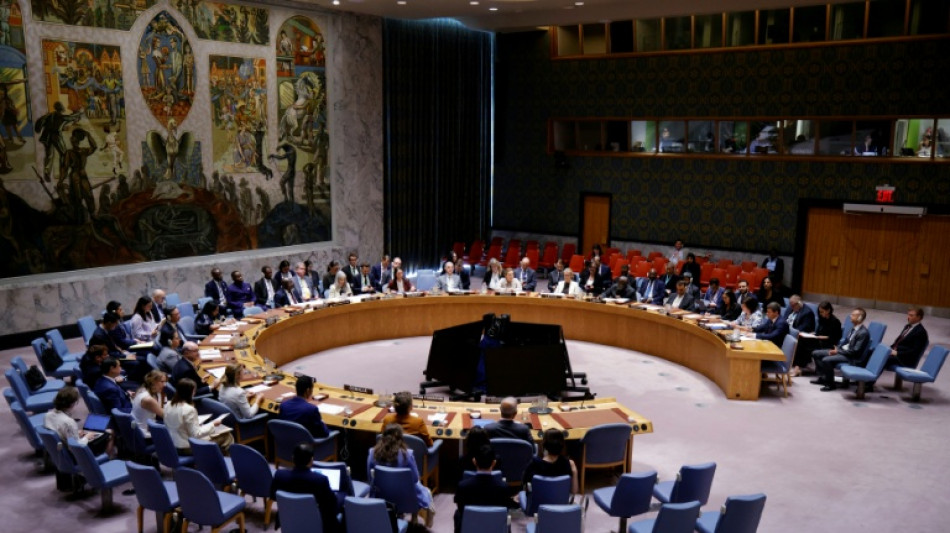
Selection process for next UN chief under way / Photo: © AFP/File

 London
 27 °C
27 °C
 Manchester
 21 °C
21 °C
 Glasgow
27 °C
Glasgow
27 °C
 Dublin
 21 °C
21 °C
 Belfast
16 °C
Belfast
16 °C
 Washington
28 °C
Washington
28 °C
 Denver
31 °C
Denver
31 °C
 Atlanta
31 °C
Atlanta
31 °C
 Dallas
 34 °C
34 °C
 Houston Texas
33 °C
Houston Texas
33 °C
 New Orleans
 32 °C
32 °C
 El Paso
34 °C
El Paso
34 °C
 Phoenix
39 °C
Phoenix
39 °C
 Los Angeles
25 °C
San Diego
24 °C
San Francisco
18 °C
Chicago
29 °C
Minneapolis
29 °C
Seattle
18 °C
Portland
19 °C
Salt Lake City
29 °C
Las Vegas
36 °C
Miami
34 °C
Jacksonville
33 °C
San Antonio
32 °C
Bermuda
28 °C
Nassau
22 °C
Iqaluit
5 °C
Yellowknife
15 °C
Anchorage
15 °C
Fairbanks
13 °C
Barrow
Los Angeles
25 °C
San Diego
24 °C
San Francisco
18 °C
Chicago
29 °C
Minneapolis
29 °C
Seattle
18 °C
Portland
19 °C
Salt Lake City
29 °C
Las Vegas
36 °C
Miami
34 °C
Jacksonville
33 °C
San Antonio
32 °C
Bermuda
28 °C
Nassau
22 °C
Iqaluit
5 °C
Yellowknife
15 °C
Anchorage
15 °C
Fairbanks
13 °C
Barrow
 2 °C
Calgary
19 °C
Edmonton
27 °C
Winnipeg
28 °C
Goose Bay
24 °C
Halifax
18 °C
Boston
20 °C
Ottawa
23 °C
Toronto
26 °C
Detroit
28 °C
Cleveland
26 °C
New York
22 °C
Baltimore
28 °C
Philadelphia
26 °C
Nuuk (Godthåb)
9 °C
Hong Kong
27 °C
Singapore
29 °C
Melbourne
25 °C
Canberra
2 °C
Calgary
19 °C
Edmonton
27 °C
Winnipeg
28 °C
Goose Bay
24 °C
Halifax
18 °C
Boston
20 °C
Ottawa
23 °C
Toronto
26 °C
Detroit
28 °C
Cleveland
26 °C
New York
22 °C
Baltimore
28 °C
Philadelphia
26 °C
Nuuk (Godthåb)
9 °C
Hong Kong
27 °C
Singapore
29 °C
Melbourne
25 °C
Canberra
 -1 °C
Adelaide
8 °C
Darwin
-1 °C
Adelaide
8 °C
Darwin
 23 °C
Perth
12 °C
Fort Worth
34 °C
Honolulu
25 °C
Sydney
23 °C
Perth
12 °C
Fort Worth
34 °C
Honolulu
25 °C
Sydney
 7 °C
Johannesburg
14 °C
Dubai
35 °C
Mumbai
28 °C
Zürich
31 °C
Tokyo
28 °C
Seoul
26 °C
Delhi
32 °C
Beijing
29 °C
Riyadh
38 °C
Prague
36 °C
Pennsylvania
24 °C
Valletta
28 °C
Manama
34 °C
Warsaw
31 °C
Stockholm
25 °C
7 °C
Johannesburg
14 °C
Dubai
35 °C
Mumbai
28 °C
Zürich
31 °C
Tokyo
28 °C
Seoul
26 °C
Delhi
32 °C
Beijing
29 °C
Riyadh
38 °C
Prague
36 °C
Pennsylvania
24 °C
Valletta
28 °C
Manama
34 °C
Warsaw
31 °C
Stockholm
25 °C
The UN Security Council began the process of selecting the UN's next secretary-general Thursday, holding a first "straw poll" to gauge the seven candidates' support for the high-profile global statesman role.
Following the first round of voting, ambassadors of the 15 Security Council members were tight-lipped about the outcome of the secret poll.
Four women and three men are so far in the running to succeed Antonio Guterres, who will complete his second five-year term on December 31, 2026.
They are Michelle Bachelet of Chile, Maria Fernanda Espinosa of Ecuador, Rafael Grossi of Argentina, Rebeca Grynspan of Costa Rica, Olara Otunnu of Uganda, Carolyn Rodrigues-Birkett of Guyana, and Macky Sall of Senegal.
Although Grossi, the head of the International Atomic Energy Agency, has arguably the best name recognition, observers believe that for now there is no clear favorite in the race that could last several months.
"I'm not going to give you the numbers," said the UN Security Council president, Kinshasa's envoy to the UN, Zenon Ngay Mukongo, who confirmed a second round of the straw poll would be announced in the coming days.
The candidates' nominating countries would be informed of the results of the initial straw poll, he added, with no public announcement planned.
Diplomats are reluctant to predict the outcome of the race because of the sway of the five permanent members of the Security Council -- the United States, Russia, China, France, and the United Kingdom -- which have not yet indicated their preferences.
Even if a candidate bags the required nine votes from the 15 available in the Security Council, they must also avoid a veto by the five major powers, which are deeply divided.
Once a candidate clears those bars, their name will go to the General Assembly of all UN members for confirmation.
On Thursday, the Council's 15 members met behind closed doors to test the waters with the first "straw poll," devised in the early 1980s in an attempt to break a deadlock between two candidates whose bids were shut down by vetoes.
The informal mechanism has persisted, in various forms, in spite of criticism from countries opposed to the opaque process.
- Time for a woman? -
Each member state must anonymously assign each candidate one of three labels: "encourage," "discourage," or "no opinion."
That would give those with no support the opportunity to withdraw -- though they are not obliged.
In the first round of a process expected to take several weeks, all ballots are the same color.
But after an unspecified number of votes, the ballots of the five permanent members will become a different color from those of the elected members, making it possible to identify potential vetoes, without knowing which country blackballed any given candidate.
"The straw polls may show that some candidates are just not viable, and allow them to bow out in a dignified manner," Richard Gowan of the International Crisis Group told AFP.
"I would be surprised if any one candidate emerges with a decisive numerical advantage."
It is tradition that the UN's top job should rotate between different regions.
Under that premise, the role should go to a candidate from Latin America this time, and there are many candidates from the region.
Panama's Ambassador to the UN Eloy Alfaro de Alba said it was a priority that the winner be a woman from Latin America.
Many states are also pushing for a woman to lead the UN for the first time.
D.Sunwoo--SG