US indicts former Cuban president as pressure builds / Photo: © AFP

 London
 23 °C
23 °C
 Manchester
17 °C
Manchester
17 °C
 Glasgow
15 °C
Glasgow
15 °C
 Dublin
19 °C
Dublin
19 °C
 Belfast
 15 °C
15 °C
 Washington
 28 °C
28 °C
 Denver
30 °C
Denver
30 °C
 Atlanta
32 °C
Atlanta
32 °C
 Dallas
37 °C
Dallas
37 °C
 Houston Texas
32 °C
Houston Texas
32 °C
 New Orleans
33 °C
New Orleans
33 °C
 El Paso
37 °C
El Paso
37 °C
 Phoenix
43 °C
Phoenix
43 °C
 Los Angeles
32 °C
San Diego
Los Angeles
32 °C
San Diego
 28 °C
San Francisco
20 °C
Chicago
28 °C
San Francisco
20 °C
Chicago
 25 °C
Minneapolis
27 °C
Seattle
25 °C
Portland
24 °C
Salt Lake City
34 °C
Las Vegas
43 °C
Miami
32 °C
Jacksonville
34 °C
San Antonio
37 °C
Bermuda
31 °C
Nassau
26 °C
Iqaluit
25 °C
Minneapolis
27 °C
Seattle
25 °C
Portland
24 °C
Salt Lake City
34 °C
Las Vegas
43 °C
Miami
32 °C
Jacksonville
34 °C
San Antonio
37 °C
Bermuda
31 °C
Nassau
26 °C
Iqaluit
 9 °C
Yellowknife
20 °C
Anchorage
14 °C
Fairbanks
11 °C
Barrow
1 °C
Calgary
28 °C
Edmonton
27 °C
Winnipeg
28 °C
Goose Bay
22 °C
Halifax
25 °C
Boston
27 °C
Ottawa
26 °C
Toronto
24 °C
Detroit
26 °C
Cleveland
24 °C
New York
27 °C
Baltimore
28 °C
Philadelphia
28 °C
Nuuk (Godthåb)
8 °C
Hong Kong
28 °C
Singapore
28 °C
Melbourne
31 °C
Canberra
0 °C
Adelaide
7 °C
Darwin
23 °C
Perth
9 °C
Yellowknife
20 °C
Anchorage
14 °C
Fairbanks
11 °C
Barrow
1 °C
Calgary
28 °C
Edmonton
27 °C
Winnipeg
28 °C
Goose Bay
22 °C
Halifax
25 °C
Boston
27 °C
Ottawa
26 °C
Toronto
24 °C
Detroit
26 °C
Cleveland
24 °C
New York
27 °C
Baltimore
28 °C
Philadelphia
28 °C
Nuuk (Godthåb)
8 °C
Hong Kong
28 °C
Singapore
28 °C
Melbourne
31 °C
Canberra
0 °C
Adelaide
7 °C
Darwin
23 °C
Perth
 9 °C
Fort Worth
36 °C
Honolulu
28 °C
Sydney
7 °C
Johannesburg
12 °C
Dubai
32 °C
Mumbai
9 °C
Fort Worth
36 °C
Honolulu
28 °C
Sydney
7 °C
Johannesburg
12 °C
Dubai
32 °C
Mumbai
 28 °C
Zürich
17 °C
Tokyo
28 °C
Seoul
25 °C
Delhi
28 °C
Zürich
17 °C
Tokyo
28 °C
Seoul
25 °C
Delhi
 30 °C
Beijing
24 °C
Riyadh
35 °C
Prague
14 °C
Pennsylvania
27 °C
Valletta
31 °C
Manama
33 °C
Warsaw
15 °C
Stockholm
15 °C
30 °C
Beijing
24 °C
Riyadh
35 °C
Prague
14 °C
Pennsylvania
27 °C
Valletta
31 °C
Manama
33 °C
Warsaw
15 °C
Stockholm
15 °C
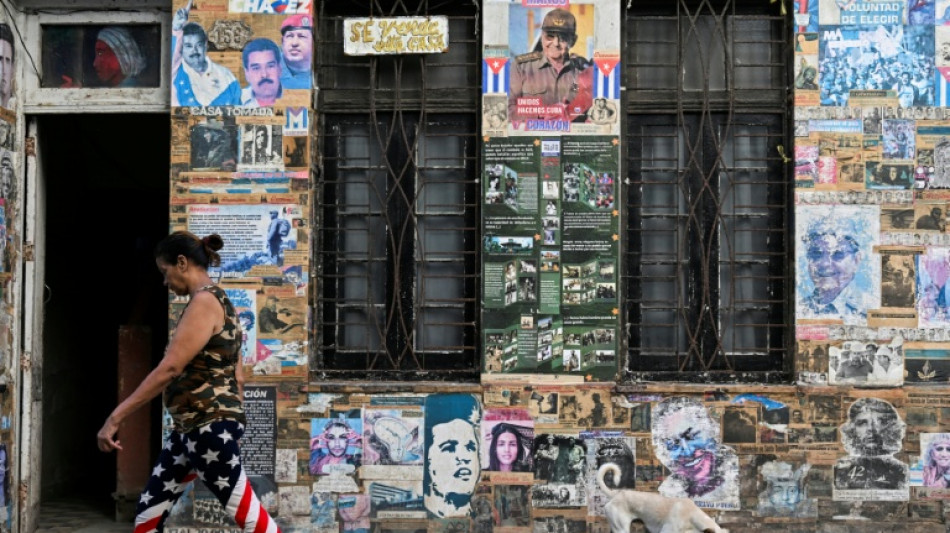
The United States on Wednesday criminally indicted Cuba's former president Raul Castro as Washington called on the communist-ruled island's people to embrace a "new path."
An indictment unsealed in a federal court in Florida charged the influential former president over the 1996 downing of` two civilian planes manned by anti-Castro pilots.
Castro, brother of Fidel Castro, the late iconic US nemesis who led the 1959 communist revolution, was charged with murder, conspiracy to kill Americans, and destruction of aircraft.
The charges added fuel to speculation that President Donald Trump intends to topple the Cuban government.
Trump previously seized on a US domestic indictment to justify military action in January that toppled and seized Venezuela's then president Nicolas Maduro, a staunch ally of the Cuban authorities.
Four people died in the 1996 downing of planes, sending relations plummeting. Two decades later, Raul Castro joined then US president Barack Obama in an effort to reconcile.
But Trump reversed Obama's effort to improve relations.
Trump has repeatedly signaled that the Cuban government could be next after Venezuela to fall, and earlier this month even said Washington would be "taking over" the Caribbean island, about 90 miles (145 km) from Florida, "almost immediately."
In a video message to Cuban people in Spanish, Secretary of State Marco Rubio, a Cuban-American, accused the Havana leadership of theft, corruption and oppression.
"President Trump is offering a new path between the US and a new Cuba," Rubio said.
"A new Cuba where you have a real opportunity to choose who governs your country and vote to replace them if they are not doing a good job."
- Ready for 'new chapter' -
The US ousting of Maduro has hit Cuba hard, cutting off a supply of free Venezuelan oil to the island which has been plunged into an economic crisis.
"In the US, we are ready to open a new chapter in the relationship between our people and our countries," Rubio said, according to an English translation of his speech released by the State Department. "And, currently, the only thing standing in the way of a better future are those who control your country."
In his speech on the day when the Cuban community in the United States marks the island's independence, Rubio accused Gaesa, the military-backed conglomerate estimated to control 70 percent of the Cuban economy, of enriching the elites at the expense of ordinary citizens.
"A 'state within the state' that is accountable to no one and hoards the profits from its businesses for the benefit of a small elite," Rubio charged. "And the only role played by the so-called 'government' is to demand that you continue making 'sacrifices' and repressing anyone who dares to complain."
Four US Congress members expressed hope that the indictments will see justice served.
"We have a different president now, a president who is not willing to look the other way," Mario Diaz-Balart of Florida told reporters during a press conference. "We expect that today justice is finally arrived."
Representative Nicole Malliotakis of New York added: "This a Communist regime that has brutally killed, tortured its people, and much of it was work of Raul Castro himself."
"We hope this will be a turning point for the Cuban people," she said.
While Cuban Americans on Wednesday marked Cuba's independence, the Cuban government emphasizes different dates in its historical narrative, particularly the victory of Fidel Castro's revolution on January 1, 1959.
"Intervention, interference, dispossession, frustration: that is what May 20th signifies in Cuba's history," Cuban President Miguel Diaz-Canel said in a post on X, referring to the Platt Amendment, an addendum to Cuba's pre-communist constitution that allowed Washington to intervene militarily in Cuba.
Q.Min--SG