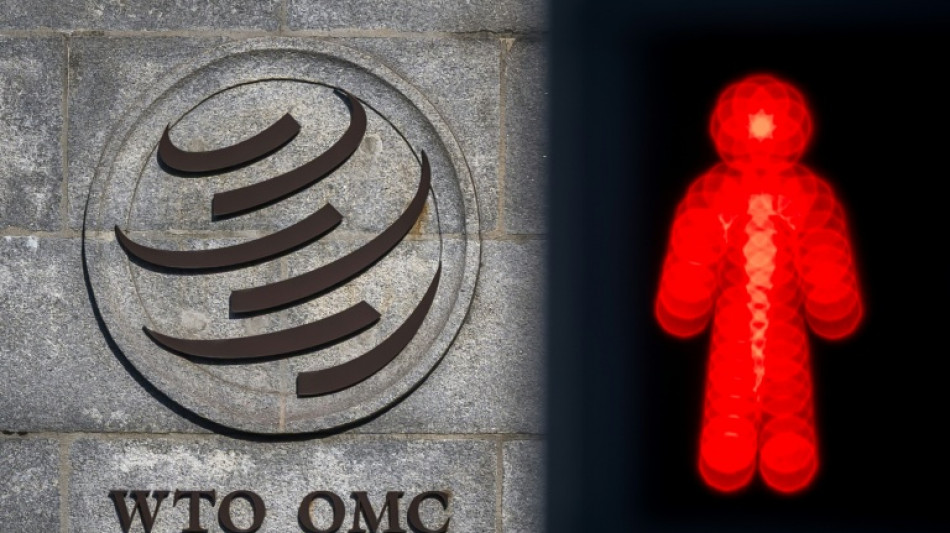
E-commerce in the crosshairs at WTO in digital taxes battle / Photo: © AFP

 London
 14 °C
14 °C

 Manchester
 17 °C
17 °C
 Glasgow
 22 °C
22 °C
 Dublin
16 °C
Dublin
16 °C
 Belfast
16 °C
Belfast
16 °C
 Washington
 24 °C
24 °C
 Denver
22 °C
Denver
22 °C
 Atlanta
23 °C
Atlanta
23 °C
 Dallas
30 °C
Dallas
30 °C
 Houston Texas
29 °C
Houston Texas
29 °C
 New Orleans
30 °C
New Orleans
30 °C
 El Paso
29 °C
El Paso
29 °C
 Phoenix
32 °C
Phoenix
32 °C
 Los Angeles
19 °C
San Diego
Los Angeles
19 °C
San Diego
 20 °C
San Francisco
14 °C
Chicago
25 °C
Minneapolis
21 °C
Seattle
14 °C
Portland
13 °C
Salt Lake City
19 °C
Las Vegas
30 °C
Miami
31 °C
Jacksonville
30 °C
San Antonio
30 °C
Bermuda
26 °C
Nassau
22 °C
Iqaluit
8 °C
Yellowknife
15 °C
Anchorage
11 °C
Fairbanks
10 °C
Barrow
20 °C
San Francisco
14 °C
Chicago
25 °C
Minneapolis
21 °C
Seattle
14 °C
Portland
13 °C
Salt Lake City
19 °C
Las Vegas
30 °C
Miami
31 °C
Jacksonville
30 °C
San Antonio
30 °C
Bermuda
26 °C
Nassau
22 °C
Iqaluit
8 °C
Yellowknife
15 °C
Anchorage
11 °C
Fairbanks
10 °C
Barrow
 -7 °C
Calgary
15 °C
Edmonton
23 °C
Winnipeg
23 °C
Goose Bay
21 °C
Halifax
22 °C
Boston
23 °C
Ottawa
25 °C
Toronto
23 °C
Detroit
25 °C
Cleveland
29 °C
New York
23 °C
Baltimore
22 °C
Philadelphia
23 °C
Nuuk (Godthåb)
5 °C
Hong Kong
-7 °C
Calgary
15 °C
Edmonton
23 °C
Winnipeg
23 °C
Goose Bay
21 °C
Halifax
22 °C
Boston
23 °C
Ottawa
25 °C
Toronto
23 °C
Detroit
25 °C
Cleveland
29 °C
New York
23 °C
Baltimore
22 °C
Philadelphia
23 °C
Nuuk (Godthåb)
5 °C
Hong Kong
 27 °C
Singapore
28 °C
Melbourne
29 °C
Canberra
27 °C
Singapore
28 °C
Melbourne
29 °C
Canberra
 4 °C
Adelaide
4 °C
Adelaide
 13 °C
Darwin
24 °C
Perth
16 °C
Fort Worth
29 °C
Honolulu
23 °C
Sydney
13 °C
Johannesburg
14 °C
Dubai
32 °C
Mumbai
31 °C
Zürich
21 °C
Tokyo
21 °C
Seoul
20 °C
Delhi
41 °C
Beijing
23 °C
Riyadh
40 °C
Prague
26 °C
Pennsylvania
21 °C
Valletta
25 °C
Manama
33 °C
Warsaw
23 °C
Stockholm
22 °C
13 °C
Darwin
24 °C
Perth
16 °C
Fort Worth
29 °C
Honolulu
23 °C
Sydney
13 °C
Johannesburg
14 °C
Dubai
32 °C
Mumbai
31 °C
Zürich
21 °C
Tokyo
21 °C
Seoul
20 °C
Delhi
41 °C
Beijing
23 °C
Riyadh
40 °C
Prague
26 °C
Pennsylvania
21 °C
Valletta
25 °C
Manama
33 °C
Warsaw
23 °C
Stockholm
22 °C
The future of digital taxes is dividing countries at the World Trade Organization, with the moratorium that has prohibited customs duties on electronic transmissions since 1998 front and centre in the debate.
The moratorium is highly important for developed countries -- notably for the United States, which is calling for it to be made permanent rather than kept under regular review.
So far, only India has openly voiced disagreement with renewing the moratorium, according to several sources close to the discussions in Yaounde at the WTO's ministerial conference, the organisation's biennial supreme decision-making body.
"There is only one country that's been vocally not supporting," a Western diplomatic source told AFP.
"Normally, it's kind of a handful of countries, whereas it's only been one so far this time."
But since decisions are made by consensus at the WTO, exerting pressure on this issue could be a way for India to gain concessions elsewhere.
- Software, cloud, telemedicine -
WTO members generally apply tariffs to imported goods and services, but in 1998, they agreed not to impose them on e-commerce.
"The rule is to have no tariffs on what circulates via the internet," Valerie Picard, an official with the International Chamber of Commerce, who is attending the conference, told AFP.
"So when you download software, when an SME uses the cloud, when a freelancer sells a design service abroad, there are no taxes at the border," she said.
"The moratorium applies to everything that is digital. It goes far beyond digital books and music. It also includes, for example, security updates, online courses, telemedicine," she added.
From 1998 onwards, the temporary moratorium on customs duties on electronic transmissions has been renewed at successive WTO ministerial conferences.
However, discussions were particularly tense at the last ministerial meeting in 2024 in Abu Dhabi. At the last minute, India agreed not to veto an extension -- but only for a maximum of two years.
In the absence of a common understanding on the scope, "the continued extension of this moratorium warrants careful reconsideration", India's commerce minister Piyush Goyal said Thursday.
The moratorium is set to expire on March 31, unless ministers in Yaounde decide otherwise.
The African, Caribbean and Pacific Group of States at the WTO is proposing to keep the moratorium until the next ministerial conference.
The United States, supported by several countries including Japan, Mexico, Australia, Norway and Switzerland, wants to make the moratorium permanent.
"The United States is not interested in another temporary extension of the moratorium," US Trade Representative Jamieson Greer said Thursday.
- 'Worst case' scenario -
Approving an open-ended moratorium "will deliver stability and predictability for all traders", while showing that the WTO can deliver results, said Joseph Barloon, the US ambassador to the organisation.
To limit opposition to the moratorium, the United States under President Donald Trump has negotiated a clause in recent bilateral agreements with certain countries, notably Indonesia.
"The worst case would, of course, be that we don't have an extension of the moratorium. That's something that we cannot exclude," the Swiss WTO ambassador Erwin Bollinger said ahead of the conference.
Some developing countries are more reticent about the moratorium because they see it as a loss of tax revenue and argue that the rapid pace of digital transformation only exacerbates the problem.
According to a 2023 study published by the Organisation for Economic Co-operation and Development, the potential budgetary impact of the moratorium is limited, "amounting to, on average, 0.68 percent of total customs revenue or 0.1 percent of total government revenue".
The OECD also noted that in most countries, the shortfall could be offset by increased VAT revenue from imports of digital services.
F.Cheon--SG