 London
 25 °C
25 °C

 Manchester
 Glasgow
 23 °C
23 °C
 Dublin
 Belfast
 Washington
 29 °C
29 °C
 Denver
 Atlanta
 25 °C
25 °C
 Dallas
 Houston Texas
 New Orleans
 El Paso
 32 °C
32 °C
 Phoenix
 Los Angeles
 6 °C
6 °C
 14 °C
14 °C
 24 °C
24 °C
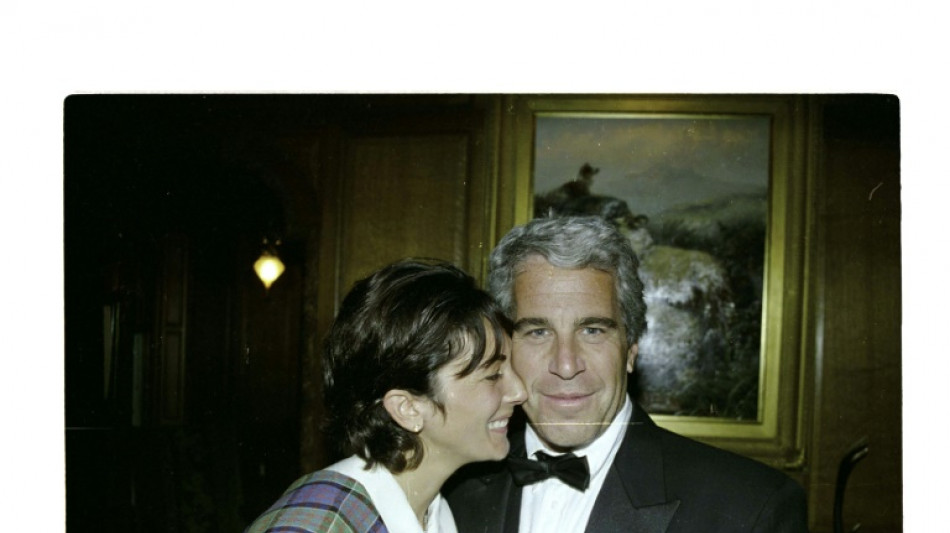
Epstein accomplice Maxwell seeks clemency from Trump before testimony
Convicted sex offender Jeffrey Epstein's accomplice Ghislaine Maxwell refused on Monday to answer questions from US lawmakers but her attorney said was prepared to speak if granted clemency by President Donald Trump.
Maxwell, 64, who is serving a 20-year prison sentence for sex trafficking, was subpoenaed by the House Oversight Committee to discuss her relations with Epstein.
Rather than answer the committee's questions, however, the former British socialite invoked her Fifth Amendment right to not incriminate herself.
"As expected, Ghislaine Maxwell took the Fifth and refused to answer any questions," committee chairman James Comer told reporters. "This is obviously very disappointing."
"We had many questions to ask about the crimes she and Epstein committed as well as questions about potential co-conspirators," he said.
Maxwell's attorney, David Markus, said she would be prepared to speak publicly if granted clemency by Trump.
"If this Committee and the American public truly want to hear the unfiltered truth about what happened, there is a straightforward path," Markus said in a statement. "Ms Maxwell is prepared to speak fully and honestly if granted clemency by President Trump."
Markus also said that Trump and former president Bill Clinton -- both of whom were once friendly with Epstein -- are "innocent of any wrongdoing."
"Ms Maxwell alone can explain why, and the public is entitled to that explanation," he said.
Maxwell is the only person convicted of a crime in connection with Epstein, who died in a New York jail cell in 2019 while awaiting trial for sex trafficking.
Maxwell was convicted in 2021 of supplying underage girls to Epstein, who had ties to powerful business executives, politicians, celebrities and academics.
She was subpoenaed to testify virtually from the Texas prison where she is serving her sentence.
Her deposition comes amid the recent release by the Justice Department of millions of documents related to the government's investigation into Epstein, many of which have been heavily redacted.
The Epstein Files Transparency Act (EFTA) passed by Congress in November compelled the Justice Department to release all of the records in its possession related to Epstein.
It required the redaction of the names or personal identifying information about Epstein's victims, who numbered more than 1,000 according to the FBI.
But the EFTA said no records could be "withheld, delayed, or redacted on the basis of embarrassment, reputational harm, or political sensitivity, including to any government official, public figure, or foreign dignitary."
- 'Baffling' -
Representative Jamie Raskin, a Democrat, was among the lawmakers who examined the unredacted Epstein files at a secure Justice Department location on Monday.
"I saw the names of lots of people who were redacted for mysterious or baffling or inscrutable reasons," Raskin told reporters. "People who were enablers and cooperators with Jeffrey Epstein that were just blanked out for no apparent reason."
The Justice Department has said no new prosecutions are expected but a number of political and business leaders around the world have been tarnished by scandal or resigned after the revelation of their ties with Epstein.
Representative Thomas Massie, a Republican, said he discovered the names of six men whose identities have been redacted from the publicly released documents and who "are likely incriminated by their inclusion in these files."
Massie declined to provide their identities but said one "is pretty high up in a foreign government."
The House Oversight Committee has also summoned Clinton and his wife, former secretary of state Hillary Clinton, to testify about their interactions with Epstein.
The Clintons have called for their depositions to be held publicly to prevent Republicans from politicizing their testimony.
Trump was once a close friend of Epstein but has not been called to testify by the Republican-controlled committee.
Trump fought for months to prevent release of the vast trove of documents about Epstein but a rebellion among Republicans forced him to sign off on a law mandating release of all the records.
The move reflected intense political pressure to address what many Americans, including Trump's own supporters, have long suspected to be a cover-up to protect rich and powerful men in Epstein's orbit.
D.Choi--SG