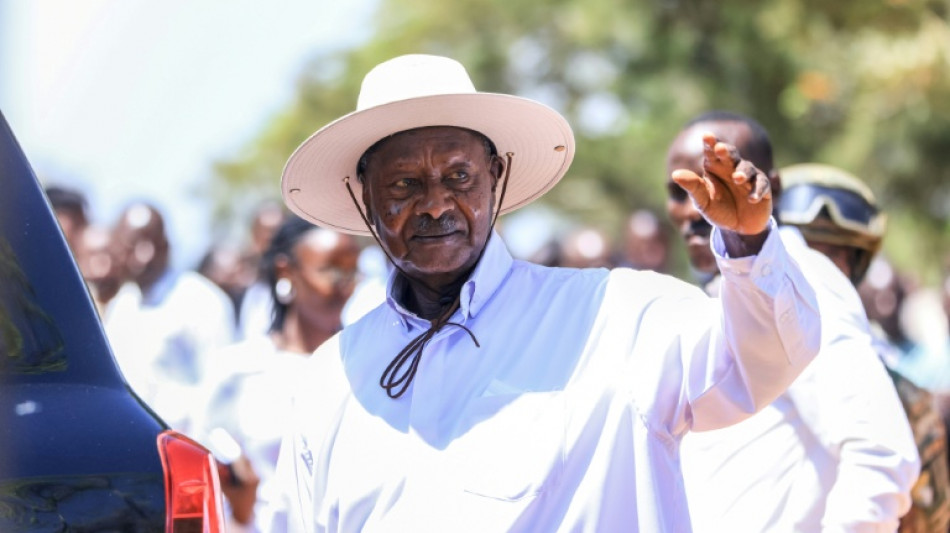
Uganda president says opposition 'terrorists' in victory speech / Photo: © AFP/File

 London
 23 °C
23 °C
 Manchester
 22 °C
22 °C
 Glasgow
24 °C
Glasgow
24 °C
 Dublin
15 °C
Dublin
15 °C
 Belfast
16 °C
Belfast
16 °C
 Washington
31 °C
Washington
31 °C
 Denver
28 °C
Denver
28 °C
 Atlanta
 26 °C
26 °C
 Dallas
35 °C
Dallas
35 °C
 Houston Texas
 35 °C
35 °C
 New Orleans
32 °C
New Orleans
32 °C
 El Paso
35 °C
El Paso
35 °C
 Phoenix
39 °C
Phoenix
39 °C
 Los Angeles
21 °C
San Diego
21 °C
San Francisco
Los Angeles
21 °C
San Diego
21 °C
San Francisco
 19 °C
Chicago
23 °C
Minneapolis
21 °C
Seattle
23 °C
Portland
24 °C
Salt Lake City
29 °C
Las Vegas
42 °C
Miami
33 °C
Jacksonville
35 °C
San Antonio
35 °C
Bermuda
28 °C
Nassau
29 °C
Iqaluit
6 °C
Yellowknife
18 °C
Anchorage
15 °C
Fairbanks
22 °C
Barrow
11 °C
Calgary
16 °C
Edmonton
25 °C
Winnipeg
17 °C
Goose Bay
22 °C
Halifax
25 °C
Boston
25 °C
Ottawa
21 °C
Toronto
20 °C
Detroit
21 °C
Cleveland
24 °C
New York
31 °C
Baltimore
32 °C
Philadelphia
32 °C
Nuuk (Godthåb)
5 °C
Hong Kong
19 °C
Chicago
23 °C
Minneapolis
21 °C
Seattle
23 °C
Portland
24 °C
Salt Lake City
29 °C
Las Vegas
42 °C
Miami
33 °C
Jacksonville
35 °C
San Antonio
35 °C
Bermuda
28 °C
Nassau
29 °C
Iqaluit
6 °C
Yellowknife
18 °C
Anchorage
15 °C
Fairbanks
22 °C
Barrow
11 °C
Calgary
16 °C
Edmonton
25 °C
Winnipeg
17 °C
Goose Bay
22 °C
Halifax
25 °C
Boston
25 °C
Ottawa
21 °C
Toronto
20 °C
Detroit
21 °C
Cleveland
24 °C
New York
31 °C
Baltimore
32 °C
Philadelphia
32 °C
Nuuk (Godthåb)
5 °C
Hong Kong
 28 °C
Singapore
29 °C
Melbourne
31 °C
Canberra
12 °C
Adelaide
12 °C
Darwin
28 °C
Singapore
29 °C
Melbourne
31 °C
Canberra
12 °C
Adelaide
12 °C
Darwin
 24 °C
Perth
7 °C
Fort Worth
35 °C
Honolulu
28 °C
Sydney
18 °C
Johannesburg
11 °C
Dubai
33 °C
Mumbai
24 °C
Perth
7 °C
Fort Worth
35 °C
Honolulu
28 °C
Sydney
18 °C
Johannesburg
11 °C
Dubai
33 °C
Mumbai
 30 °C
Zürich
24 °C
Tokyo
21 °C
Seoul
24 °C
Delhi
35 °C
Beijing
24 °C
Riyadh
34 °C
Prague
26 °C
Pennsylvania
29 °C
Valletta
26 °C
Manama
31 °C
Warsaw
21 °C
Stockholm
19 °C
30 °C
Zürich
24 °C
Tokyo
21 °C
Seoul
24 °C
Delhi
35 °C
Beijing
24 °C
Riyadh
34 °C
Prague
26 °C
Pennsylvania
29 °C
Valletta
26 °C
Manama
31 °C
Warsaw
21 °C
Stockholm
19 °C
Uganda's President Yoweri Museveni, fresh from winning a seventh term at age 81, said Sunday that the opposition were "terrorists" who had tried to use violence to overturn results.
Official results showed Museveni winning a landslide with 72 percent from Thursday's election, but the poll was criticised by African election observers and rights groups due to the heavy repression of the opposition and an internet blackout.
The whereabouts of opposition leader Bobi Wine, real name Robert Kyagulanyi, who won 25 percent, were still uncertain after he said on Saturday that he had escaped a police raid on his home and was in hiding.
Police denied the raid and said Wine was still at home, but blocked journalists from approaching the residence.
Wine has not posted on X since Saturday when he denounced the "blatant theft of the presidential election".
- 'We know what you are doing' -
In his victory speech on Sunday, Museveni said Wine's party, the National Unity Platform (NUP), had planned to attack polling stations in areas where they were losing.
"Some of the opposition are wrong and also terrorists," said Museveni, who has ruled the east African country since 1986, when he seized power at the head of an rebel army.
"They are working with some foreigners and some homosexual groups," he said.
He added: "All the traitors -- this is free advice from me -- stop everything, because we know what you are doing and you will not do it."
Although some internet was restored late Saturday, the government said it would maintain a ban on social media platforms until further notice.
The government blocked the internet two days before the vote, saying it was necessary to prevent "misinformation" and "incitement to violence".
Uganda has remained largely peaceful since the results, though there were small-scale protests late Saturday, with AFP journalists saying tear gas was fired in parts of the capital Kampala.
The security presence was significantly reduced on Sunday, with people out on the streets and shops open.
- Attacks planned 'everywhere' -
Analysts say the election was a formality, given Museveni's total control over the state and security apparatus, though many Ugandans still praise him for bring relative peace and prosperity.
He has taken no chances in trying to prevent the violent unrest that rocked neighbouring Tanzania during polls in October.
The most serious reports of violence on election day came from the Butambala area of central Uganda, where an opposition lawmaker told AFP that security forces had killed at least 10 people at his home.
Museveni echoed the police account, that the deaths resulted from a planned attack on a ballot-tallying centre and police station in the area.
He claimed the NUP had planned similar attacks "everywhere".
Human Rights Watch accused the government of "brutal repression" of the opposition ahead of the vote.
Another key opposition leader, Kizza Besigye, who ran four times against Museveni, was abducted in Kenya in 2024 and brought back to a military court in Uganda for a treason trial that is ongoing.
African election observers, including a team from the African Union, said Saturday that "reports of intimidation, arrest and abductions" had "instilled fear and eroded public trust in the electoral process".
Q.Min--SG