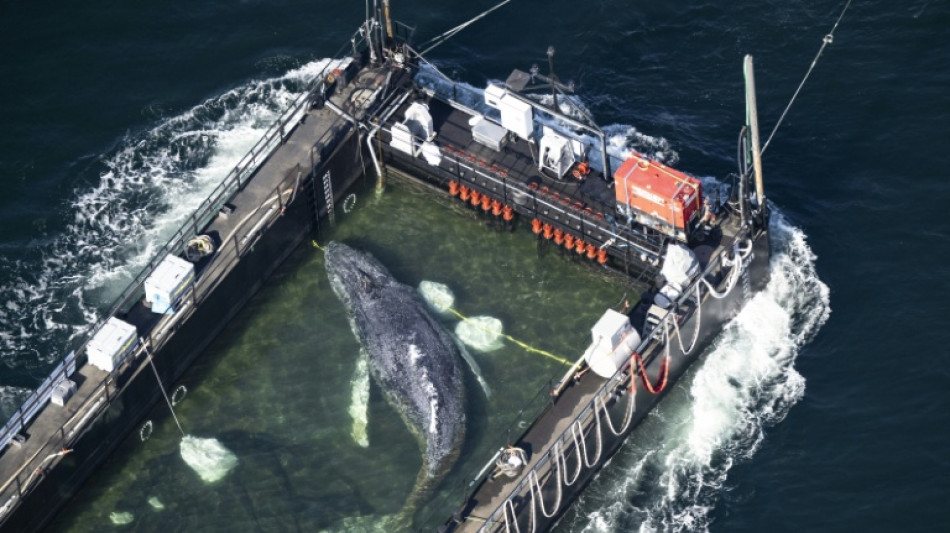
Stranded whale rescued in Germany found dead in Denmark / Photo: © dpa/AFP/File

 London
 18 °C
18 °C

 Manchester
 12 °C
12 °C
 Glasgow
17 °C
Glasgow
17 °C
 Dublin
 12 °C
12 °C
 Belfast
13 °C
Belfast
13 °C
 Washington
25 °C
Washington
25 °C
 Denver
18 °C
Denver
18 °C
 Atlanta
 29 °C
29 °C
 Dallas
27 °C
Dallas
27 °C
 Houston Texas
 33 °C
33 °C
 New Orleans
31 °C
New Orleans
31 °C
 El Paso
23 °C
El Paso
23 °C
 Phoenix
29 °C
Phoenix
29 °C
 Los Angeles
28 °C
San Diego
25 °C
San Francisco
23 °C
Chicago
Los Angeles
28 °C
San Diego
25 °C
San Francisco
23 °C
Chicago
 18 °C
Minneapolis
18 °C
Minneapolis
 23 °C
Seattle
17 °C
Portland
22 °C
Salt Lake City
24 °C
Las Vegas
33 °C
Miami
27 °C
Jacksonville
28 °C
San Antonio
35 °C
Bermuda
27 °C
Nassau
20 °C
Iqaluit
4 °C
Yellowknife
8 °C
Anchorage
3 °C
Fairbanks
4 °C
Barrow
-3 °C
Calgary
14 °C
Edmonton
30 °C
Winnipeg
15 °C
Goose Bay
18 °C
Halifax
18 °C
Boston
19 °C
Ottawa
19 °C
Toronto
21 °C
Detroit
19 °C
Cleveland
21 °C
New York
22 °C
Baltimore
24 °C
Philadelphia
23 °C
Nuuk (Godthåb)
0 °C
Hong Kong
28 °C
Singapore
23 °C
Seattle
17 °C
Portland
22 °C
Salt Lake City
24 °C
Las Vegas
33 °C
Miami
27 °C
Jacksonville
28 °C
San Antonio
35 °C
Bermuda
27 °C
Nassau
20 °C
Iqaluit
4 °C
Yellowknife
8 °C
Anchorage
3 °C
Fairbanks
4 °C
Barrow
-3 °C
Calgary
14 °C
Edmonton
30 °C
Winnipeg
15 °C
Goose Bay
18 °C
Halifax
18 °C
Boston
19 °C
Ottawa
19 °C
Toronto
21 °C
Detroit
19 °C
Cleveland
21 °C
New York
22 °C
Baltimore
24 °C
Philadelphia
23 °C
Nuuk (Godthåb)
0 °C
Hong Kong
28 °C
Singapore
 26 °C
Melbourne
27 °C
Canberra
16 °C
Adelaide
18 °C
Darwin
24 °C
Perth
12 °C
Fort Worth
29 °C
Honolulu
27 °C
Sydney
22 °C
Johannesburg
8 °C
Dubai
32 °C
Mumbai
26 °C
Zürich
17 °C
Tokyo
19 °C
Seoul
13 °C
Delhi
24 °C
Beijing
14 °C
Riyadh
31 °C
Prague
15 °C
Pennsylvania
23 °C
Valletta
23 °C
Manama
33 °C
Warsaw
13 °C
Stockholm
14 °C
26 °C
Melbourne
27 °C
Canberra
16 °C
Adelaide
18 °C
Darwin
24 °C
Perth
12 °C
Fort Worth
29 °C
Honolulu
27 °C
Sydney
22 °C
Johannesburg
8 °C
Dubai
32 °C
Mumbai
26 °C
Zürich
17 °C
Tokyo
19 °C
Seoul
13 °C
Delhi
24 °C
Beijing
14 °C
Riyadh
31 °C
Prague
15 °C
Pennsylvania
23 °C
Valletta
23 °C
Manama
33 °C
Warsaw
13 °C
Stockholm
14 °C
A humpback whale that underwent a rescue operation in Germany two weeks ago after beaching itself there has been found dead near a Danish island, officials said Saturday.
"It can now be confirmed that the stranded humpback whale near Anholt is the same whale that was previously stranded in Germany and was the subject of rescue attempts," Jane Hansen, division head at the Danish Environmental Protection Agency, said in a statement to AFP.
The whale, dubbed "Timmy" in German media, was initially spotted stuck on sandbank on March 23. After several failed attempts it was finally put in a barge and released into the North Sea off Denmark on May 2.
The whale carcass was first spotted off the coast of the Danish island Anholt in the Kattegat strait between Sweden and Denmark on Thursday but authorities were at first unable to confirm it was the same whale.
"Conditions today made it possible for a local employee from the Danish Nature Agency to locate and retrieve an attached tracking device that was still fastened to the whale's back," said Hansen.
"The position and appearance of the device confirm that this is the same whale that had previously been observed and handled in German waters."
Hansen added that "at this time, there are no concrete plans to remove the whale from the area or to perform a necropsy, and it is not currently considered to pose a problem in the area."
- 'Explosion' risk -
The Danish Environmental Protection Agency said that while it understood "the considerable public interest in this particular whale," people should keep a safe distance and refrain from approaching the whale.
"This is because the whale may carry diseases that can also be transmitted to humans, and there may also be a risk of explosion," as decomposition creates large volumes of gases.
The fate of the whale when it was first stranded was followed closely by the German public for weeks after it was first stranded on March 23.
It was first seen there on the sandbank near the city of Luebeck, on Germany's Baltic Sea coast, before freeing itself but then becoming stuck again several times.
Various attempts to save it failed, and authorities had announced they were giving up.
But then two wealthy entrepreneurs, Karin Walter-Mommert and Walter Gunz, stepped in to finance the rescue, whose cost was estimated at 1.5 million euros ($1.7 million).
They came up with what many saw as a long-shot plan: coax the whale into the water-filled hold of a special barge and tow it back to its natural habitat.
Some experts at the time criticised the privately financed rescue plan, saying it would only cause the animal more distress.
Till Backhaus, environment minister for Mecklenburg–West Pomerania region, where the whale first got into difficulties, said its death should make people "take the protection of nature, preserving species and climate change even more seriously".
Calling for lessons to be learned from the incident, Backhaus said he wanted to have talks with the Danish authorities about what would be done with the animal -- and about the private initiative that tried to save the whale.
U.Moon--SG