'Wallace & Gromit' creators turn 50 with spook-tacular Shaun yarn / Photo: © AFP

 London
 20 °C
20 °C

 Manchester
 15 °C
15 °C
 Glasgow
17 °C
Glasgow
17 °C
 Dublin
15 °C
Dublin
15 °C
 Belfast
14 °C
Belfast
14 °C
 Washington
28 °C
Washington
28 °C
 Denver
 27 °C
27 °C
 Atlanta
 28 °C
28 °C
 Dallas
29 °C
Dallas
29 °C
 Houston Texas
28 °C
Houston Texas
28 °C
 New Orleans
29 °C
New Orleans
29 °C
 El Paso
32 °C
El Paso
32 °C
 Phoenix
35 °C
Phoenix
35 °C
 Los Angeles
22 °C
San Diego
21 °C
San Francisco
18 °C
Chicago
27 °C
Minneapolis
27 °C
Seattle
17 °C
Portland
15 °C
Salt Lake City
27 °C
Las Vegas
33 °C
Miami
29 °C
Jacksonville
26 °C
San Antonio
31 °C
Bermuda
28 °C
Nassau
24 °C
Iqaluit
10 °C
Yellowknife
15 °C
Anchorage
17 °C
Fairbanks
7 °C
Barrow
3 °C
Calgary
Los Angeles
22 °C
San Diego
21 °C
San Francisco
18 °C
Chicago
27 °C
Minneapolis
27 °C
Seattle
17 °C
Portland
15 °C
Salt Lake City
27 °C
Las Vegas
33 °C
Miami
29 °C
Jacksonville
26 °C
San Antonio
31 °C
Bermuda
28 °C
Nassau
24 °C
Iqaluit
10 °C
Yellowknife
15 °C
Anchorage
17 °C
Fairbanks
7 °C
Barrow
3 °C
Calgary
 17 °C
Edmonton
17 °C
Edmonton
 27 °C
Winnipeg
19 °C
Goose Bay
20 °C
Halifax
19 °C
Boston
20 °C
Ottawa
20 °C
Toronto
21 °C
Detroit
21 °C
Cleveland
21 °C
New York
27 °C
Baltimore
28 °C
Philadelphia
26 °C
Nuuk (Godthåb)
4 °C
Hong Kong
28 °C
Singapore
30 °C
Melbourne
28 °C
Canberra
27 °C
Winnipeg
19 °C
Goose Bay
20 °C
Halifax
19 °C
Boston
20 °C
Ottawa
20 °C
Toronto
21 °C
Detroit
21 °C
Cleveland
21 °C
New York
27 °C
Baltimore
28 °C
Philadelphia
26 °C
Nuuk (Godthåb)
4 °C
Hong Kong
28 °C
Singapore
30 °C
Melbourne
28 °C
Canberra
 15 °C
Adelaide
15 °C
Darwin
31 °C
Perth
15 °C
Adelaide
15 °C
Darwin
31 °C
Perth
 17 °C
Fort Worth
29 °C
Honolulu
27 °C
Sydney
22 °C
Johannesburg
15 °C
Dubai
34 °C
Mumbai
28 °C
Zürich
16 °C
Tokyo
25 °C
Seoul
28 °C
Delhi
28 °C
Beijing
25 °C
Riyadh
30 °C
Prague
18 °C
Pennsylvania
25 °C
Valletta
28 °C
Manama
33 °C
Warsaw
16 °C
Stockholm
9 °C
17 °C
Fort Worth
29 °C
Honolulu
27 °C
Sydney
22 °C
Johannesburg
15 °C
Dubai
34 °C
Mumbai
28 °C
Zürich
16 °C
Tokyo
25 °C
Seoul
28 °C
Delhi
28 °C
Beijing
25 °C
Riyadh
30 °C
Prague
18 °C
Pennsylvania
25 °C
Valletta
28 °C
Manama
33 °C
Warsaw
16 °C
Stockholm
9 °C
Crochet hook in hand, the animator slightly raises the eyelid of a clay model sheep in a filmmaking technique as old as cinema, perfected over five decades by Aardman Animations.
In the basement of the Bristol-based company -- whose beloved characters such as Wallace and Gromit have won them four Oscars -- designers have been working for the past three-and-a-half years on the latest adventure in their "Shaun the Sheep" series.
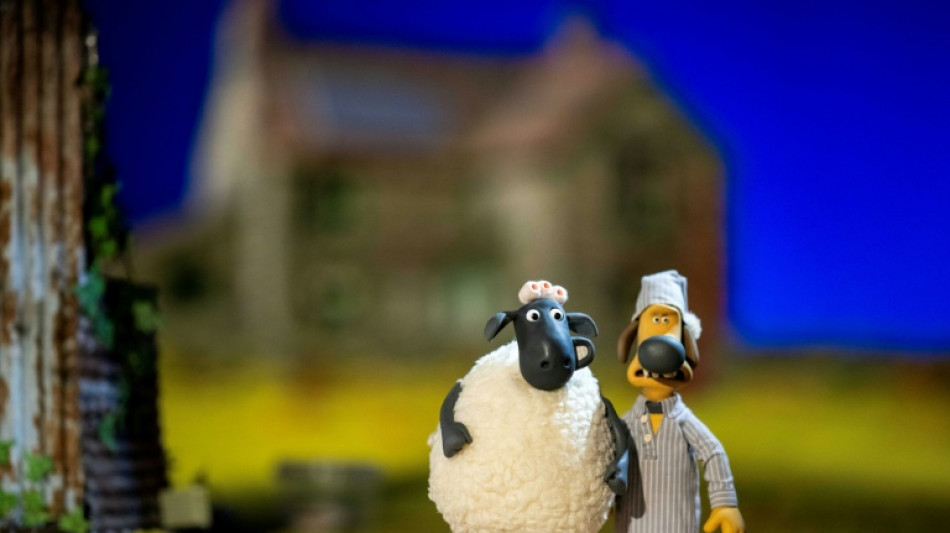
"Shaun the Sheep: The Beast of Mossy Bottom" is the third full-length film starring the mischievous, savvy sheep, due to be released on September 18 in UK cinemas.
This time Shaun and his flock have to work together to save Halloween from a fur-raising creature terrorising their farm's pumpkin patch.
The film marks the 50th anniversary of Aardman, founded in Bristol in 1976 by Peter Lord and David Sproxton who went to school together and used to make models on a kitchen table.
In the dim light of Aardman's basement, about 40 small rooms with a blue background have been set up, with curtains concealing puppet-sized scenes from the film.
One curtain opens to reveal Mossy Bottom farm and its autumnal colours, another a mad science lab, while behind yet another is a black and red fishing boat.
In the world of sophisticated digitalised animations and computer graphics, Aardman stands out for its painstaking handcrafted "stop-motion" technique, which dates back to the late 19th century.
"Our aim as animators is to make people think these puppets are alive," said animation director Claire Rolls.
"Nowadays, there's not a lot of places in the world doing stop-motion animation."
- 'Spare arms and ears' -
In a docklands scene, Rolls, who joined the company in 1998, was working with team member Ed Jackson setting up camera shots.
The sheep, wearing yellow rain jackets, are trying to attract the attention of a crew of sailors, Rolls explained.
The animator gets down to work, eyes fixed on a screen that alternates between the shot he's preparing and the previous frame.
To create the illusion of movement, he raises one sheep's head, lowers another's legs, and clicks the camera once the shot is ready.
After two days of this patient, exacting work, he will have filmed about two seconds of footage, each second made up of 24 frames.
And the complete film is made up of more than 100,000 of these painstakingly created stop-motion frames.
The creatures that populate the studio's productions are created upstairs, in the puppet department.
After first appearing in 1995 in "Wallace & Gromit: A Close Shave", Shaun has become one of the studio's icons.
He is now the hero of a television series, shown in 170 countries, and two previous films, and has attracted a huge social media following.
Amid a jumble of drawings and materials, Kate Anderson, the head of the puppet department, pulls out a box filled with interchangeable parts - a mouth closed, a jaw dropped, or rounded in an 'O' of surprise.
Such parts help animators to illustrate different "sounds and expressions" for Bitzer, the long-suffering sheepdog.
The puppet makers "stick with clay for really expressive areas of the puppet, like the face," said Anderson, even if sometimes silicon is used to make the characters' bodies.
That material is more resistant when applied to a metal frame, she explained, with the figures nailed in place to avoid any continuity errors.
"Because animators are touching puppets all day long, they do break quite easily," she said.
"We always know that we need to have a big stock of spare sheep arms and ears."
- 'Quirky, fun' -
"The animation is like a live performance," said co-director Steve Cox.
It is different to computer-generated images and two dimensional or 2D ones as "you can't really go back and change things once you've done it".
Filming is done in silence and sound added later, but that doesn't stop its "very British" humour, kind of "quirky and fun", from shining through.
"We do use digital effects in our films, but they're an embellishment to... the hand-crafted work," said producer Richard Beek.
Artificial intelligence has not been used for this latest Shaun movie, he said.
Aardman's playful, imaginative clay figures are instantly recognisable, from the pumpkins to Shaun's mad-scientist glasses.
The release of Disney's "Toy Story" in 1995 caused concern, as with AI, that "we're going to make films now on computers" and there would no longer be any place for stop-motion.
"But what's happened is we've continued to make films," Beek said.
"The whole world changes around us, but there's lots of things that stay the same at Aardman, and maybe that's partly what people like... there's a familiarity to it."
B.Ha--SG