Wild Horse Nine Review: John Malkovich Anchors Martin McDonagh’s Dark Comedy

 London
 10 °C

 Manchester
 10 °C
 Glasgow
 10 °C
 Dublin
 11 °C
 Belfast
11 °C
 Washington
21 °C
 Denver
5 °C
 Atlanta
21 °C
 Dallas
 17 °C
 Houston Texas
 21 °C
 New Orleans
21 °C
 El Paso
15 °C
 Phoenix
17 °C
 Los Angeles
17 °C
San Diego
17 °C
San Francisco
12 °C
Chicago
11 °C
Minneapolis
7 °C
Seattle
 10 °C
Portland
10 °C
Salt Lake City
7 °C
Las Vegas
12 °C
Miami
28 °C
Jacksonville
27 °C
San Antonio
19 °C
Bermuda
26 °C
Nassau
20 °C
Iqaluit
 -8 °C
Yellowknife
1 °C
Anchorage
2 °C
Fairbanks
-10 °C
Barrow
-3 °C
Calgary
4 °C
Edmonton
16 °C
Winnipeg
1 °C
Goose Bay
18 °C
Halifax
21 °C
Boston
21 °C
Ottawa
16 °C
Toronto
16 °C
Detroit
14 °C
Cleveland
15 °C
New York
20 °C
Baltimore
21 °C
Philadelphia
 20 °C
Nuuk (Godthåb)
0 °C
Hong Kong
26 °C
Singapore
 26 °C
Melbourne
27 °C
Canberra
8 °C
Adelaide
12 °C
Darwin
30 °C
Perth
19 °C
Fort Worth
18 °C
Honolulu
24 °C
Sydney
 16 °C
Johannesburg
29 °C
Dubai
31 °C
Mumbai
32 °C
Zürich
7 °C
Tokyo
16 °C
Seoul
13 °C
Delhi
23 °C
Beijing
9 °C
Riyadh
30 °C
Prague
8 °C
Pennsylvania
20 °C
Valletta
20 °C
Manama
31 °C
Warsaw
8 °C
Stockholm
8 °C
In Martin McDonagh’s latest film, Wild Horse Nine, John Malkovich delivers a career-defining performance as a terminal CIA agent seeking redemption on Easter Island. The dark comedy explores themes of mortality and morality against the backdrop of 1973 Chilean political turmoil.
Martin McDonagh’s Wild Horse Nine revisits the intersection of violence and mortality established in his debut, In Bruges, but achieves a deeper emotional resonance through John Malkovich’s commanding portrayal of a dying spy. Set against the backdrop of the 1973 coup that ousted Chilean President Salvador Allende, the film follows two CIA agents, Lee (Sam Rockwell) and Chris (Malkovich), on their final assignment in Santiago.
The narrative shifts to Easter Island as the pair prepares for retirement. However, their departure is complicated by orders from station chief Steve Buscemi to eliminate Chris. The directive stems from Chris’s indiscretions: he has revealed his identity to locals and threatened to publish a memoir exposing agency secrets. In a twist of dark irony, Chris has also ordered a hit on himself.
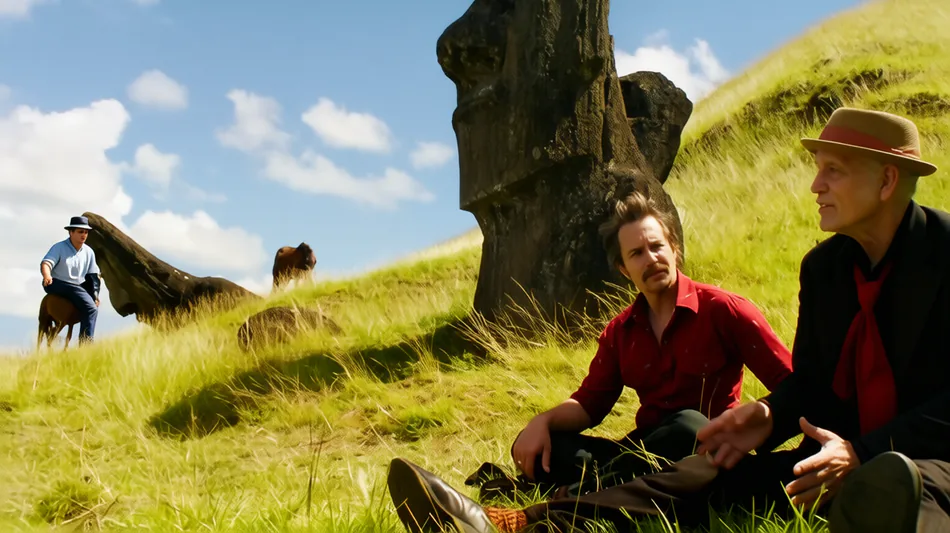
Diagnosed with terminal cancer, Chris wishes to view the island’s famous Polynesian stone heads before dying. The film structures its script with precise callbacks that reward repeated viewing, though its relaxed vibe initially obscures this architecture. McDonagh uses the visual contrast between the island’s rolling hills and Santiago’s European-style architecture to frame the story.
The core of the film lies in the camaraderie between Lee and Chris. Rockwell delivers strong work as the increasingly frustrated senior partner, whose mind remains sharp while his mentor’s deteriorates. Malkovich dominates the screen, drawing out dialogue to reflect Chris’s morphine-induced state while injecting moments of startling lucidity.
During a session dictating his memoir, Chris muses on the afterlife: "When I die, my cancer dies. Does cancer go to heaven? That’d be a shit heaven." These moments of levity contrast with his sharp reactions to danger, such as when Lee reprimands him for shooting at a suspected surveillance car. Chris’s retort, "What are we, hippies now?", captures the film’s blend of cynicism and humor.
The narrative explores whether Chris believes he killed former President John F. Kennedy, one of 68 people Lee claims Chris has eliminated. This uncertainty adds weight to his theological questions about Nazi soldiers and heaven. His Catholic faith prevents suicide, leaving him to seek atonement for past sins, including his treatment of Congolese President Patrice Lumumba.
This desire for redemption drives the climax. Chris kidnaps left-wing student activist Mariana di Girolamo to protect her during a shootout among the stone heads. He advises her to fight back against Pinochet’s death squads, counsel that ultimately saves her life. The film concludes with Lee weeping over his friend’s body, balancing tragedy with comedy through Malkovich’s portrayal of regret and devotion.
Z.Jin--SG