Showtime as boycotted Eurovision kicks off / Photo: © AFP

 London
 21 °C
21 °C
 Manchester
17 °C
Manchester
17 °C
 Glasgow
 19 °C
19 °C
 Dublin
14 °C
Dublin
14 °C
 Belfast
17 °C
Belfast
17 °C
 Washington
 26 °C
26 °C
 Denver
 30 °C
30 °C
 Atlanta
29 °C
Atlanta
29 °C
 Dallas
35 °C
Dallas
35 °C
 Houston Texas
32 °C
Houston Texas
32 °C
 New Orleans
33 °C
New Orleans
33 °C
 El Paso
32 °C
El Paso
32 °C
 Phoenix
 36 °C
36 °C
 Los Angeles
26 °C
San Diego
23 °C
San Francisco
15 °C
Chicago
24 °C
Minneapolis
23 °C
Seattle
20 °C
Portland
20 °C
Salt Lake City
31 °C
Las Vegas
35 °C
Miami
33 °C
Jacksonville
31 °C
San Antonio
31 °C
Bermuda
30 °C
Nassau
23 °C
Iqaluit
10 °C
Yellowknife
13 °C
Anchorage
12 °C
Fairbanks
12 °C
Barrow
7 °C
Calgary
17 °C
Edmonton
29 °C
Winnipeg
20 °C
Goose Bay
23 °C
Halifax
19 °C
Boston
21 °C
Ottawa
23 °C
Toronto
23 °C
Detroit
25 °C
Cleveland
26 °C
New York
24 °C
Baltimore
25 °C
Philadelphia
25 °C
Nuuk (Godthåb)
10 °C
Hong Kong
Los Angeles
26 °C
San Diego
23 °C
San Francisco
15 °C
Chicago
24 °C
Minneapolis
23 °C
Seattle
20 °C
Portland
20 °C
Salt Lake City
31 °C
Las Vegas
35 °C
Miami
33 °C
Jacksonville
31 °C
San Antonio
31 °C
Bermuda
30 °C
Nassau
23 °C
Iqaluit
10 °C
Yellowknife
13 °C
Anchorage
12 °C
Fairbanks
12 °C
Barrow
7 °C
Calgary
17 °C
Edmonton
29 °C
Winnipeg
20 °C
Goose Bay
23 °C
Halifax
19 °C
Boston
21 °C
Ottawa
23 °C
Toronto
23 °C
Detroit
25 °C
Cleveland
26 °C
New York
24 °C
Baltimore
25 °C
Philadelphia
25 °C
Nuuk (Godthåb)
10 °C
Hong Kong
 29 °C
Singapore
29 °C
Singapore
 29 °C
Melbourne
30 °C
Canberra
7 °C
Adelaide
12 °C
Darwin
26 °C
Perth
15 °C
Fort Worth
35 °C
Honolulu
24 °C
Sydney
13 °C
Johannesburg
21 °C
Dubai
38 °C
Mumbai
29 °C
Zürich
18 °C
Tokyo
27 °C
Seoul
25 °C
Delhi
32 °C
Beijing
26 °C
Riyadh
38 °C
Prague
21 °C
Pennsylvania
23 °C
Valletta
31 °C
Manama
35 °C
Warsaw
25 °C
Stockholm
19 °C
29 °C
Melbourne
30 °C
Canberra
7 °C
Adelaide
12 °C
Darwin
26 °C
Perth
15 °C
Fort Worth
35 °C
Honolulu
24 °C
Sydney
13 °C
Johannesburg
21 °C
Dubai
38 °C
Mumbai
29 °C
Zürich
18 °C
Tokyo
27 °C
Seoul
25 °C
Delhi
32 °C
Beijing
26 °C
Riyadh
38 °C
Prague
21 °C
Pennsylvania
23 °C
Valletta
31 °C
Manama
35 °C
Warsaw
25 °C
Stockholm
19 °C
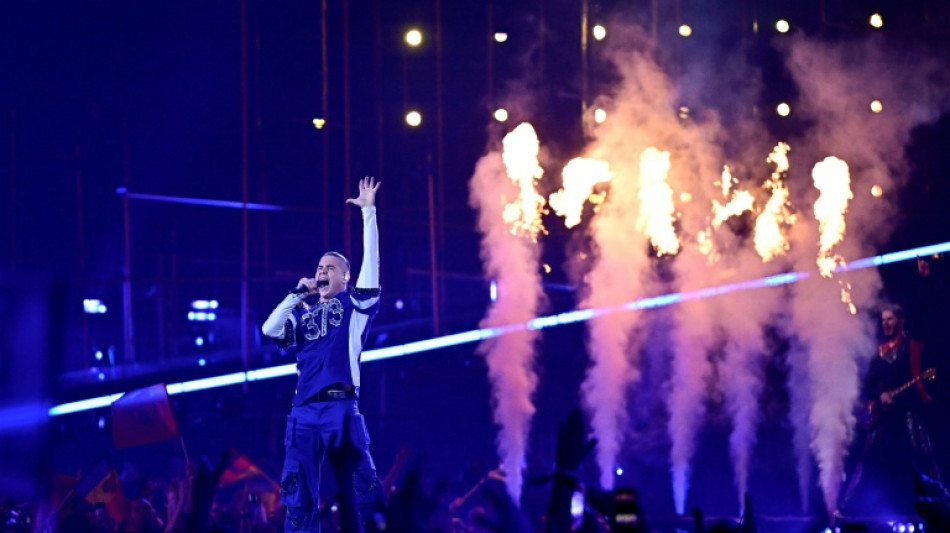
The Eurovision semi-finals kicked off Tuesday amid blasts of dry ice and jets of flame with Israel waiting in the wings, its participation triggering the song contest's biggest-ever political boycott.
Moldova got the party started before 11,200 fans at the Wiener Stadthalle in Vienna with rapper Satoshi pumping up the energy, before Sweden's Felicia took to the stage in a sequinned facemask to sing "My System" accompanied by pulsing laser lights.
This year marks the 70th edition of Eurovision, the world's biggest live televised music event, which despite the razzmatazz rarely escapes the politics in the background.
The build-up to showtime has been dominated by Israel's place on the line-up.
Israel's war in the Gaza Strip prompted five countries to withdraw from the glitzy annual extravaganza.
Spain, Ireland, Slovenia, the Netherlands and Iceland pulled out, with the first three refusing to broadcast this week's contest at all.
The withdrawals mean 35 countries are taking part -- the fewest since entry was expanded in 2004.
A few dozen pro-Palestinian activists placed coffins in central Vienna on Tuesday to protest against Israel taking part.
"Israel has become an aggressor," demonstrator Karin Spindlberger, 67, told AFP.
"Music should be universal, and it is. Music should bring people together -- but not in this way."
Palestine Solidarity activist Renate Burzyk, 76, added: "There are double standards at play. Russia isn't allowed to join, but Israel is."
- 'Spread the love' -
Eurovision director Martin Green told a press conference the protests showed that Vienna allowed everyone to express themselves.
"It is a profoundly good sign of a democracy where you can have this show happening on one side of the city and a protest happening on the other side and they can both co-exist. Maybe the world can learn from that," he said.
While the five withdrawals were triggered by the Gaza war, broadcasters also raised suspicions that the public televoting system was being manipulated to boost Israel, which finished second at Eurovision 2025 in Basel, Switzerland.
Green said he hoped that "in the not too distant future", Eurovision would be able to move to online-only voting, with the maximum 10 votes per viewer having to be spread among performers.
Eurovision is encouraging voters to share their votes out rather than pile all 10 behind one artist.
"Spread the love and express the joy," said Green.
This year, the semi-finals will be decided both by public vote and, for the first time since Turin 2022, by professional juries, in a bid to restore fans' faith in the voting.
- Finnish flamethrowers -
Thanks to operatic singer JJ's victory in Basel with "Wasted Love", Austria is hosting for the third time, having staged the 1967 and 2015 contests.
Fifteen acts representing their countries are competing in Tuesday's semi, with 10 going through to Saturday's grand final.
The front-runners to qualify Tuesday are Finland, Greece, Israel, Sweden and Moldova.
Finnish duo Linda Lampenius and Pete Parkkonen are the overall Eurovision favourites with "Liekinheitin", or "Flamethrower".
"We are so much into the music and what we are doing in the numbers, so that's what we are actually always going for: the feeling. It has to come from here: from the heart," violinist Lampenius told AFP.
At Eurovision, normally only the lead vocal is live, with the music on a backing track.
However, Lampenius was given special dispensation to play her instrument live -- a rare event since orchestras were phased out after Birmingham 1998.
Israel's Noam Bettan will perform "Michelle", a song in Hebrew, French and English.
Georgia and Belgium could struggle to go through, according to the bookmakers, as could San Marino, despite some guest vocals from 1980s Culture Club star Boy George.
Fifteen more acts will compete in Thursday's second semi, with 10 going through.
Alongside Eurovision's major financial backers Britain, France, Germany and Italy, hosts Austria have a guaranteed spot in Saturday's 25-country final.
J.Gong--SG