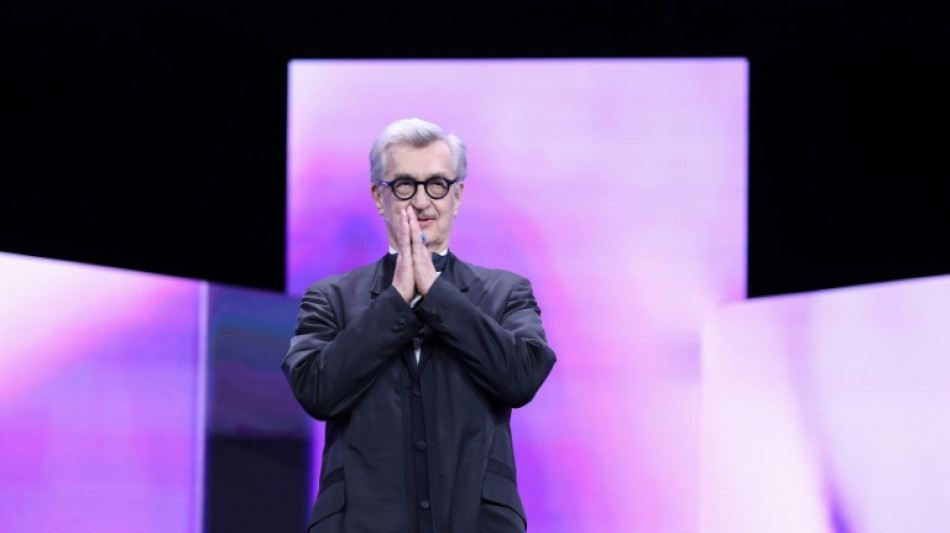
Political drama overshadows Berlin Film Festival finale / Photo: © AFP

 London
 19 °C
19 °C

 Manchester
15 °C
Manchester
15 °C
 Glasgow
 15 °C
15 °C
 Dublin
16 °C
Dublin
16 °C
 Belfast
15 °C
Belfast
15 °C
 Washington
32 °C
Washington
32 °C
 Denver
 30 °C
30 °C
 Atlanta
35 °C
Atlanta
35 °C
 Dallas
 38 °C
38 °C
 Houston Texas
 36 °C
36 °C
 New Orleans
34 °C
New Orleans
34 °C
 El Paso
33 °C
El Paso
33 °C
 Phoenix
36 °C
Phoenix
36 °C
 Los Angeles
28 °C
San Diego
27 °C
San Francisco
16 °C
Chicago
25 °C
Minneapolis
24 °C
Seattle
23 °C
Portland
25 °C
Salt Lake City
34 °C
Las Vegas
38 °C
Miami
34 °C
Jacksonville
34 °C
San Antonio
35 °C
Bermuda
30 °C
Nassau
27 °C
Iqaluit
10 °C
Yellowknife
14 °C
Anchorage
12 °C
Fairbanks
13 °C
Barrow
5 °C
Calgary
23 °C
Edmonton
28 °C
Winnipeg
20 °C
Goose Bay
20 °C
Halifax
29 °C
Boston
30 °C
Ottawa
23 °C
Toronto
23 °C
Detroit
26 °C
Cleveland
26 °C
New York
28 °C
Baltimore
29 °C
Philadelphia
27 °C
Nuuk (Godthåb)
11 °C
Hong Kong
26 °C
Singapore
28 °C
Melbourne
32 °C
Canberra
11 °C
Adelaide
Los Angeles
28 °C
San Diego
27 °C
San Francisco
16 °C
Chicago
25 °C
Minneapolis
24 °C
Seattle
23 °C
Portland
25 °C
Salt Lake City
34 °C
Las Vegas
38 °C
Miami
34 °C
Jacksonville
34 °C
San Antonio
35 °C
Bermuda
30 °C
Nassau
27 °C
Iqaluit
10 °C
Yellowknife
14 °C
Anchorage
12 °C
Fairbanks
13 °C
Barrow
5 °C
Calgary
23 °C
Edmonton
28 °C
Winnipeg
20 °C
Goose Bay
20 °C
Halifax
29 °C
Boston
30 °C
Ottawa
23 °C
Toronto
23 °C
Detroit
26 °C
Cleveland
26 °C
New York
28 °C
Baltimore
29 °C
Philadelphia
27 °C
Nuuk (Godthåb)
11 °C
Hong Kong
26 °C
Singapore
28 °C
Melbourne
32 °C
Canberra
11 °C
Adelaide
 10 °C
Darwin
23 °C
Perth
10 °C
Darwin
23 °C
Perth
 12 °C
Fort Worth
38 °C
Honolulu
26 °C
Sydney
12 °C
Fort Worth
38 °C
Honolulu
26 °C
Sydney
 16 °C
Johannesburg
17 °C
Dubai
36 °C
Mumbai
29 °C
Zürich
21 °C
Tokyo
27 °C
Seoul
25 °C
Delhi
31 °C
Beijing
25 °C
Riyadh
16 °C
Johannesburg
17 °C
Dubai
36 °C
Mumbai
29 °C
Zürich
21 °C
Tokyo
27 °C
Seoul
25 °C
Delhi
31 °C
Beijing
25 °C
Riyadh
 37 °C
Prague
24 °C
Pennsylvania
25 °C
Valletta
29 °C
Manama
35 °C
Warsaw
22 °C
Stockholm
19 °C
37 °C
Prague
24 °C
Pennsylvania
25 °C
Valletta
29 °C
Manama
35 °C
Warsaw
22 °C
Stockholm
19 °C
The 76th Berlin Film Festival draws to a close on Saturday after 10 days in which the 22 films in competition were often overshadowed by a row over the role politics should play in filmmaking.
The controversy erupted at the beginning of the festival when jury president Wim Wenders answered a question about the German government's support for Israel by saying: "We cannot really enter the field of politics."
At the same press conference he had earlier said that films had the power to "change the world" but in a different way from party politics.
"No movie has ever changed the ideas of a politician, but we can change the idea that people have of how they should live," Wenders, 80, said.
But his comments in response to the question on Israel prompted a storm of outrage.
Award-winning Indian novelist Arundhati Roy, who had been due to present a restored version of a 1989 film she wrote, pulled out of the event, branding Wender's words "unconscionable" and "jaw-dropping".
On Tuesday, a letter signed by dozens of film industry figures, including Javier Bardem, Tilda Swinton and Adam McKay, condemned the Berlin festival's "silence on the genocide of Palestinians".
- Films overshadowed -
The letter, drafted by the Film Workers for Palestine collective, accused the Berlinale of being involved in "censoring artists who oppose Israel's ongoing genocide against Palestinians in Gaza and the German state's key role in enabling it".
Director Tricia Tuttle, in her second year at the helm of the Berlinale, has firmly rejected the accusations, describing some of the claims in the letter as "misinformation" and "inaccurate".
She called for "cool heads in hot times" and expressed fears that the controversy was crowding out conversation about the films.
Among the standout entries in the official competition was "We Are All Strangers" by Anthony Chen.
Set in Chen's native Singapore, the film is a moving family drama which playfully satirises the yawning social disparities to be found in the city-state's glittering skyscrapers.
German actress Sandra Hueller, who gained international acclaim for her roles in "The Zone of Interest" and "Anatomy of a Fall", received audience plaudits for her turn as the title character in "Rose" by Austrian director Markus Schleinzer.
The black-and-white drama tells the story of a woman passing herself off as a man in rural 17th-century Germany to escape the constraints of patriarchy.
- Repression in Iran -
Juliette Binoche, playing a woman caring for her mother with dementia, also moved cinemagoers in "Queen at Sea" by American director Lance Hammer, who had not made a feature film since 2008.
Sensitively, the film portrays the devastation Alzheimer's disease inflicts on a patient's loved ones.
"My husband's got dementia, so I have had a lot of background," a visibly moved actress Anna Calder-Marshall, who plays the ailing mother in the film, told a press conference.
The first major event of the film calendar also provided a platform for Iranian filmmakers to address the deadly crackdown on anti-government protests in their home country.
Director Mahnaz Mohammadi, who has spent time in Tehran's notorious Evin prison, presented "Roya", a searing portrayal of conditions in the jail and the traces they leave on prisoners' psyches.
Dissident director Jafar Panahi, who won the Cannes Palme d'Or for "It Was Just An Accident", also spoke from the Berlinale to denounce the Iranian government's repression of protestors, which international organisations say has left thousands dead.
"An unbelievable crime has happened. Mass murder has happened. People are not even allowed to mourn their loved ones," Panahi told a talk organised as part of the festival.
"People do not want violence. They avoid violence. It is the regime that forces violence upon them," Panahi said.
In December he was sentenced to one year in prison and a travel ban in Iran but has expressed his intention to return nevertheless.
I.Do--SG