
 London
 5 °C

 Manchester
 1 °C
 Glasgow
 Dublin
 6 °C
 Belfast
 2 °C
 Washington
 14 °C
 Denver
 14 °C
 Atlanta
 Dallas
 22 °C
 Houston Texas
 New Orleans
 El Paso
 Phoenix
 Los Angeles
 19 °C
 19 °C
 -3 °C
 27 °C
Egypt joins Saudi air defense
Egyptian troops had been in Saudi Arabia for months before Cairo publicly acknowledged their presence. Their air defense mission binds the security of Saudi cities to Egypt’s interest in keeping the Suez Canal busy. It also reveals how Crown Prince Mohammed bin Salman is dividing the work of defending his kingdom among allies willing to offer very different kinds of help.
On November 19, 2026, a Houthi missile struck the Riyadh tower that houses Saudi Arabia’s sovereign wealth fund. A day later, the Saudi-led coalition said it had struck Yemen’s Red Sea port of Hodeidah. The Houthis warned airlines to stay out of Saudi airspace. Deadly attacks had already interrupted flights at Riyadh’s main airport in October. What began as a war over who governs Yemen now reaches people boarding flights in the Saudi capital and families buying food brought ashore on the Yemeni coast.
What Cairo agreed to defend
President Abdel Fattah el-Sisi offered military help on October 17. Nine days later, in a closed session, Egypt’s House of Representatives gave him the two-thirds majority he sought to help defend Saudi Arabia. In November, Foreign Minister Badr Abdelatty disclosed that Egyptian forces had gone to the kingdom months earlier, at Riyadh’s request, during the escalation with Iran. Parliament had authorized Sisi to reinforce a deployment whose existence he had yet to acknowledge publicly.
Abdelatty described an air defense mission that included protecting holy sites in Saudi Arabia, home to Mecca and Medina. He gave no troop count. Cairo has announced no Egyptian airstrikes in Yemen. That distinction matters in a country with painful memories of the 1960s, when President Gamal Abdel Nasser sent tens of thousands of Egyptian troops to North Yemen to support the republicans. Saudi Arabia backed the royalists. The two governments that once supported opposite sides in Yemen now have to decide how far their shared interests there extend.
The view from Suez
Egypt has a reason of its own to care what happens off Yemen. A captain approaching the Red Sea from the Indian Ocean must first pass through Bab el-Mandeb, the narrow strait between Yemen and the Horn of Africa. When a shipping line sends an Asia-to-Europe vessel around the Cape of Good Hope to avoid that passage, Egypt loses a toll more than a thousand miles away. Every mile of the Suez Canal can remain open and the revenue still disappears.
In October, 1,490 vessels passed through Suez and revenue reached $724 million, up from $373 million a year earlier. One trade that has helped the recovery is Saudi oil. Saudi crude can travel by pipeline from the eastern oilfields to Yanbu, on the kingdom’s western coast. A tanker loading there can sail north to Suez without passing through either the Strait of Hormuz or Bab el-Mandeb. A Saudi tanker and a container ship from Asia can pay tolls at the same Egyptian canal after voyages with very different exposure to the war.
Canal traffic is only one part of Egypt’s financial relationship with Riyadh. As the two governments discussed military assistance in October, Cairo was also seeking to roll over a $5.3 billion Saudi deposit at its central bank. Extending a deposit of that size eases the immediate call on the dollars Egypt needs to pay for imports and service its debt. Riyadh thus matters to the Egyptian treasury twice over, as a creditor and as an oil exporter whose tankers use the canal.
There is a precedent closer than Nasser’s campaign. The Houthis took Sanaa in 2014. When Saudi Arabia intervened on behalf of Yemen’s internationally recognized government in March 2015, four Egyptian naval vessels passed through Suez toward the Gulf of Aden. Egypt’s interest in the shipping lane has endured through successive phases of the war. What Sisi has now made explicit is his willingness to put Egyptian forces on Saudi soil to defend the kingdom itself.
Washington still has a say
Saudi Arabia has been assembling several kinds of help. On August 7, it signed the Makkah Joint Defence Agreement with Turkey and Pakistan. Egypt has considered joining. Its deployment proceeded separately, at Saudi invitation. The difference became particularly clear on October 26. While Egyptian legislators voted on defending the kingdom, senior Saudi, Turkish and Pakistani officials were in Tehran discussing how to ease tensions with Iran. Riyadh could ask Cairo for protection and speak directly to the government that backs the Houthis on the same day.
In September, President Donald Trump declined a Saudi request for American strikes on the Houthis. His administration offered intelligence sharing and help with targeting. On November 19, the same day the missile hit the Saudi capital, Crown Prince Mohammed bin Salman met Admiral Brad Cooper, the head of U.S. Central Command, in Riyadh. For the crown prince, access to American intelligence and to the senior U.S. commander in the region still matters. Neither gives him the authority to commit American forces. Egypt’s willingness to provide forces gives him an option that does not require the White House to change its mind.
For Yemenis, the pressing question is whether any of these arrangements can shorten the fighting. By November 10, the renewed hostilities had displaced an estimated 174,000 children. Hodeidah, the port the coalition struck ten days later, is the main entry point for food and other supplies into the Houthi-held north. On November 16, Abdelatty and his Saudi counterpart, Prince Faisal bin Farhan, discussed efforts to prevent further fighting. Egypt has good reason to pursue those talks alongside its military commitment. Air defenses can protect people inside Saudi Arabia. They can do little for a Yemeni family waiting for food to come ashore at Hodeidah.

Turkey's President Erdogan shows supporters he is ready for a fight

Пригожин, тупая русская свинья, испугался в Бахмуте!

LIVE TRANSMISSION LONDON: Coronation King Charles III.

Три тупые свиньи: Пригожин, Шойгу и Путин!

Anti-social Russian gets a bashing as flag thief

Россия: Кто придет после военного преступника Путина?

Ukrainian army destroys Russian terror bastards

У российского террористического государства мало боеприпасов

Россия: путинские преступники заработали миллиард

Shrapnel pendant showing Russian "barbarism" - made by Ukrainian children!
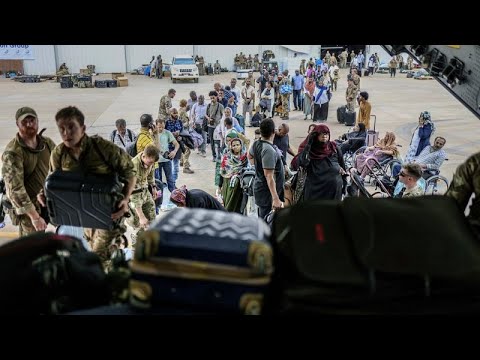
Sudan: Heavy fighting continues despite ceasefire



