Hezbollah's 'existential' war against Israel could be its last / Photo: © AFP

 London
 15 °C
15 °C

 Manchester
 12 °C
12 °C
 Glasgow
 14 °C
14 °C
 Dublin
 12 °C
12 °C
 Belfast
13 °C
Belfast
13 °C
 Washington
 18 °C
18 °C
 Denver
 17 °C
17 °C
 Atlanta
18 °C
Atlanta
18 °C
 Dallas
 17 °C
17 °C
 Houston Texas
15 °C
Houston Texas
15 °C
 New Orleans
 15 °C
15 °C
 El Paso
18 °C
El Paso
18 °C
 Phoenix
 32 °C
32 °C
 Los Angeles
23 °C
San Diego
21 °C
San Francisco
16 °C
Chicago
6 °C
Minneapolis
12 °C
Seattle
21 °C
Portland
24 °C
Salt Lake City
19 °C
Las Vegas
29 °C
Miami
28 °C
Jacksonville
25 °C
San Antonio
17 °C
Bermuda
21 °C
Nassau
12 °C
Iqaluit
-10 °C
Yellowknife
6 °C
Anchorage
5 °C
Fairbanks
11 °C
Barrow
-6 °C
Calgary
21 °C
Edmonton
15 °C
Winnipeg
13 °C
Goose Bay
8 °C
Halifax
14 °C
Boston
16 °C
Ottawa
10 °C
Toronto
8 °C
Detroit
7 °C
Cleveland
7 °C
New York
14 °C
Baltimore
17 °C
Philadelphia
16 °C
Nuuk (Godthåb)
Los Angeles
23 °C
San Diego
21 °C
San Francisco
16 °C
Chicago
6 °C
Minneapolis
12 °C
Seattle
21 °C
Portland
24 °C
Salt Lake City
19 °C
Las Vegas
29 °C
Miami
28 °C
Jacksonville
25 °C
San Antonio
17 °C
Bermuda
21 °C
Nassau
12 °C
Iqaluit
-10 °C
Yellowknife
6 °C
Anchorage
5 °C
Fairbanks
11 °C
Barrow
-6 °C
Calgary
21 °C
Edmonton
15 °C
Winnipeg
13 °C
Goose Bay
8 °C
Halifax
14 °C
Boston
16 °C
Ottawa
10 °C
Toronto
8 °C
Detroit
7 °C
Cleveland
7 °C
New York
14 °C
Baltimore
17 °C
Philadelphia
16 °C
Nuuk (Godthåb)
 -1 °C
Hong Kong
24 °C
Singapore
26 °C
Melbourne
28 °C
Canberra
14 °C
Adelaide
21 °C
Darwin
27 °C
Perth
8 °C
Fort Worth
17 °C
Honolulu
27 °C
Sydney
-1 °C
Hong Kong
24 °C
Singapore
26 °C
Melbourne
28 °C
Canberra
14 °C
Adelaide
21 °C
Darwin
27 °C
Perth
8 °C
Fort Worth
17 °C
Honolulu
27 °C
Sydney
 19 °C
Johannesburg
11 °C
Dubai
30 °C
Mumbai
29 °C
Zürich
9 °C
Tokyo
20 °C
Seoul
16 °C
Delhi
26 °C
Beijing
15 °C
Riyadh
27 °C
Prague
10 °C
Pennsylvania
12 °C
Valletta
16 °C
Manama
27 °C
Warsaw
9 °C
Stockholm
15 °C
19 °C
Johannesburg
11 °C
Dubai
30 °C
Mumbai
29 °C
Zürich
9 °C
Tokyo
20 °C
Seoul
16 °C
Delhi
26 °C
Beijing
15 °C
Riyadh
27 °C
Prague
10 °C
Pennsylvania
12 °C
Valletta
16 °C
Manama
27 °C
Warsaw
9 °C
Stockholm
15 °C
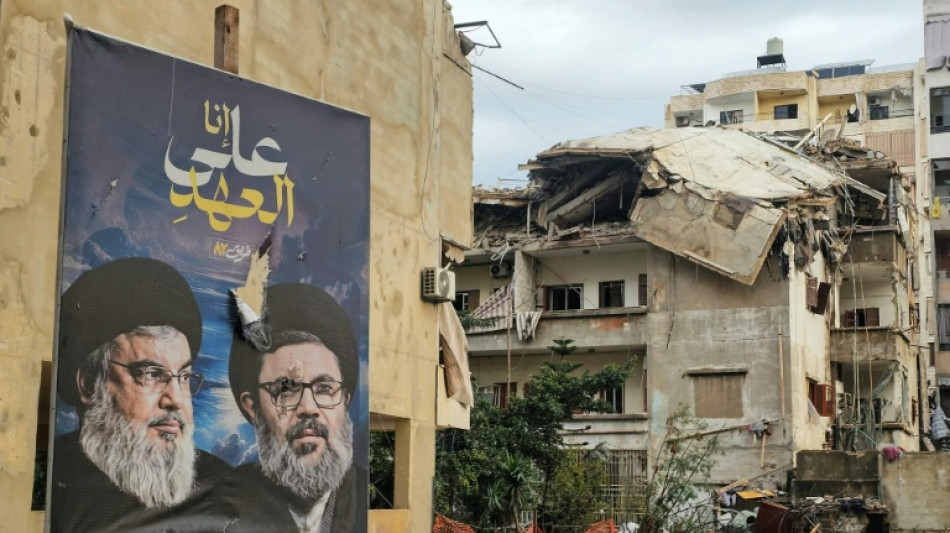
Hezbollah suffered heavy losses in a war with Israel more than a year ago, but the Shia movement has now regrouped only to end up fighting what it has called an "existential battle" and which some warn could be its last.
Lebanon was drawn into the Middle East war last week when the militant group, funded and armed by Iran, attacked Israel in response to the killing of Iran's supreme leader Ayatollah Ali Khamenei in US-Israeli strikes.
Israel, which had continued to strike targets in Lebanon even before the war, despite a 2024 ceasefire with Hezbollah, has launched deadly air attacks, sent ground troops into border areas and issued evacuation warnings that have displaced hundreds of thousands of people.
On Friday, Hezbollah chief Naim Qassem said the movement was ready for a long confrontation.
"This is an existential battle... we will not allow the enemy to achieve its goal of eliminating our existence," he said.
A Hezbollah source requesting anonymity said the group had gone "all in".
Either Hezbollah "is finished or it establishes a new equation involving Israel's complete withdrawal from Lebanon and a halt to its attacks", he told AFP.
The source said Hezbollah decided to fight months ago but was waiting for a change in the regional status quo "which it found in the US-Israeli war on Iran".
The group, he added, "knows well that whatever the outcome of that war, its turn would come and Israel would not hesitate to launch a broad campaign against it".
- 'Absorbed shocks' -
Israel kept striking Lebanon after the 2024 ceasefire, killing around 500 people including many fighters from Hezbollah, which initially refrained from retaliating.
Hezbollah "absorbed shocks after the previous war, bandaged its wounds... and reorganised its ranks. And today it is fighting a battle that it is prepared for", the group's source said.
Hezbollah's leadership has denied the battle's timing was linked to the Iran war, instead saying it lost patience with Israeli attacks.
But that hasn't convinced officials or swathes of the population who have expressed increasing anger at the group for dragging Lebanon into a new war.
Military expert Hassan Jouni said that for Hezbollah "this is an existential battle... so it will fight until the last breath".
"For Israel, this is the final battle against Hezbollah," he said, noting the current circumstances, which Israel sees an opportunity to destroy its foe, may not reappear.
He pointed to factors including the favourable regional and international situation under "the administration of US President Donald Trump", and a badly weakened Iran.
Lebanese authorities committed to disarming Hezbollah after the 2024 ceasefire and the army had been dismantling the group's infrastructure near the Israeli border.
Last week, Beirut banned Hezbollah's military and security activities, and Lebanese President Joseph Aoun has accused Hezbollah of working to "collapse" the state "for the sake of the Iranian regime's calculations".
- 'Finished' -
Until just before Hezbollah entered the conflict, Lebanese officials were unaware of the group's intentions.
Shortly before the first rockets were fired on March 2, Hezbollah sent a delegation to inform its ally parliament speaker Nabih Berri, a source familiar with the meeting told AFP on condition of anonymity.
Hezbollah surprised friends and foes with its attacks, after the battering its leadership and arsenal took in the 2024 conflict, and the loss of its major supply route through Syria with the fall of longtime ruler Bashar al-Assad.
Last week, the Israeli military's international spokesman Lieutenant Colonel Nadav Shoshani said Hezbollah still has "significant amounts of weapons that endanger Israeli civilians".
Despite the already enormous cost to Lebanon in destruction and displacement, mainly from areas seen as Hezbollah heartlands where the group is usually celebrated as victorious, it has insisted on carrying on.
President Aoun has received no response to his proposal of direct negotiations with Israel, which has kept up threats of further destruction unless authorities disarm Hezbollah and stop its attacks.
To academic and lawyer Ali Mourad, "Hezbollah's priority was to open a Lebanese front in the service of the Iranian agenda, after holding back" since 2024.
The group is fighting "an existential battle on two fronts: the Lebanese front and its (Iranian) ally's political, ideological and strategic front", he told AFP.
"Hezbollah is finished as a regional power and as a strategic weapon" for Iran, he added, predicting that "this war will not end in victory" for the group.
Y.Ko--SG