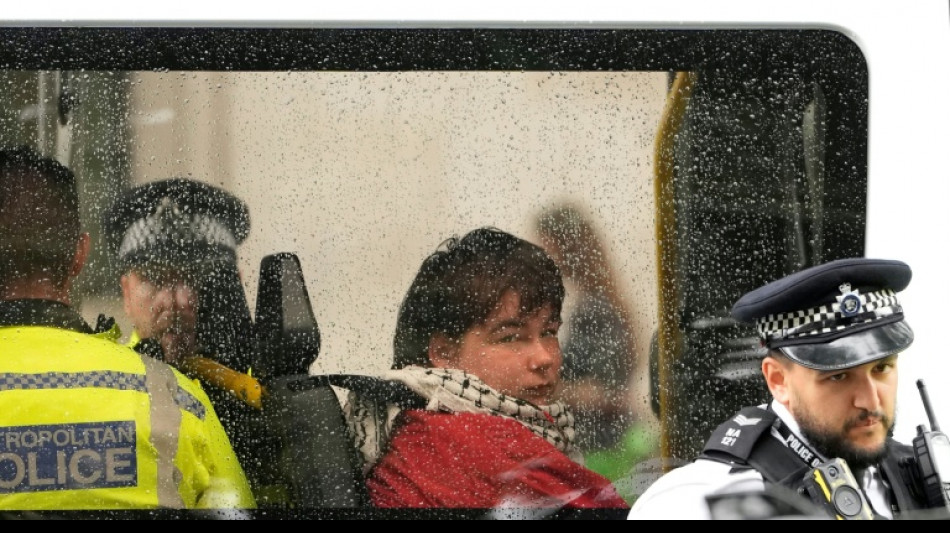
HRW warns right to protest 'under attack' in UK / Photo: © AFP

 London
 19 °C
19 °C
 Manchester
 18 °C
18 °C
 Glasgow
 19 °C
19 °C
 Dublin
 17 °C
17 °C
 Belfast
15 °C
Belfast
15 °C
 Washington
26 °C
Washington
26 °C
 Denver
 21 °C
21 °C
 Atlanta
 22 °C
22 °C
 Dallas
29 °C
Dallas
29 °C
 Houston Texas
 29 °C
29 °C
 New Orleans
28 °C
New Orleans
28 °C
 El Paso
29 °C
El Paso
29 °C
 Phoenix
33 °C
Phoenix
33 °C
 Los Angeles
16 °C
San Diego
18 °C
San Francisco
15 °C
Chicago
17 °C
Minneapolis
Los Angeles
16 °C
San Diego
18 °C
San Francisco
15 °C
Chicago
17 °C
Minneapolis
 12 °C
Seattle
16 °C
Portland
21 °C
Salt Lake City
19 °C
Las Vegas
33 °C
Miami
28 °C
Jacksonville
27 °C
San Antonio
28 °C
Bermuda
25 °C
Nassau
25 °C
Iqaluit
4 °C
Yellowknife
13 °C
Anchorage
18 °C
Fairbanks
18 °C
Barrow
10 °C
Calgary
10 °C
Edmonton
17 °C
Winnipeg
13 °C
Goose Bay
16 °C
Halifax
19 °C
Boston
19 °C
Ottawa
17 °C
Toronto
16 °C
Detroit
15 °C
Cleveland
15 °C
New York
25 °C
Baltimore
25 °C
Philadelphia
25 °C
Nuuk (Godthåb)
0 °C
Hong Kong
31 °C
Singapore
12 °C
Seattle
16 °C
Portland
21 °C
Salt Lake City
19 °C
Las Vegas
33 °C
Miami
28 °C
Jacksonville
27 °C
San Antonio
28 °C
Bermuda
25 °C
Nassau
25 °C
Iqaluit
4 °C
Yellowknife
13 °C
Anchorage
18 °C
Fairbanks
18 °C
Barrow
10 °C
Calgary
10 °C
Edmonton
17 °C
Winnipeg
13 °C
Goose Bay
16 °C
Halifax
19 °C
Boston
19 °C
Ottawa
17 °C
Toronto
16 °C
Detroit
15 °C
Cleveland
15 °C
New York
25 °C
Baltimore
25 °C
Philadelphia
25 °C
Nuuk (Godthåb)
0 °C
Hong Kong
31 °C
Singapore
 32 °C
Melbourne
28 °C
Canberra
10 °C
Adelaide
14 °C
Darwin
28 °C
Perth
18 °C
Fort Worth
30 °C
Honolulu
27 °C
Sydney
19 °C
Johannesburg
8 °C
Dubai
36 °C
Mumbai
30 °C
Zürich
24 °C
Tokyo
28 °C
Seoul
34 °C
Delhi
38 °C
Beijing
28 °C
Riyadh
36 °C
Prague
24 °C
Pennsylvania
22 °C
Valletta
25 °C
Manama
32 °C
Warsaw
19 °C
Stockholm
19 °C
32 °C
Melbourne
28 °C
Canberra
10 °C
Adelaide
14 °C
Darwin
28 °C
Perth
18 °C
Fort Worth
30 °C
Honolulu
27 °C
Sydney
19 °C
Johannesburg
8 °C
Dubai
36 °C
Mumbai
30 °C
Zürich
24 °C
Tokyo
28 °C
Seoul
34 °C
Delhi
38 °C
Beijing
28 °C
Riyadh
36 °C
Prague
24 °C
Pennsylvania
22 °C
Valletta
25 °C
Manama
32 °C
Warsaw
19 °C
Stockholm
19 °C
Human Rights Watch (HRW) warned Thursday that the UK has "severely restricted the right to protest" in recent years and was expanding "repressive measures" against peaceful demonstrators.
A report titled "'Silencing the Streets': The Right to Protest Under Attack in the UK," comes a few weeks after Swedish activist Greta Thunberg was arrested and then released at a London protest in support of the Palestine Action group, banned under UK anti-terror laws.
"The UK is now adopting protest-control tactics imposed in countries where democratic safeguards are collapsing," HRW researcher Lydia Gall said.
"The Labour government has taken a deeply alarming direction on protest rights and appears to be determined to suppress these rights further," the rights organisation said in a press release.
According to the HRW research from 2024 and 2025, protesters were "increasingly detained, charged and in some cases sentenced" to multi-year jail terms for non-violent actions including for attending meetings to plan action.
The previous Conservative government brought in sweeping changes to protest laws in 2023 to prevent "disruptive" tactics often used by climate protesters, such as slow walking on roads disrupting traffic or attaching themselves to objects and buildings.
Some of these actions, the HRW report says, would in the past only have resulted in fines or suspended sentences.
"The UK's anti-protest laws create a chilling effect on the right to peaceful assembly," the report said, condemning Prime Minister Keir Starmer's Labour government for failing to overturn the legislation.
Yasmine Ahmed, UK director of HRW, told AFP she believed it was all down to the government's efforts to appear tough on law and order.
But she was "very surprised" about these measures as Starmer was a prominent human rights lawyer.
"This UK government has not only failed to repeal legislation that the last government enacted, which severely restricts the right to peaceful protest, but has in fact supercharged it and imposed further restrictions," she said.
She said she was concerned about the "precedent this is setting for future governments".
In the future such tough laws might not be used against "climate protesters" or those "protesting about genocides ... it could be about anyone that the government disagrees with."
A crime and policing bill currently in parliament would introduce new protest restrictions, including expanding police powers to ban demonstrators from wearing face coverings.
Since it was proscribed in July, at least 2,300 people have been arrested for showing support for Palestine Action according to protest organisers.
L.Jeong--SG