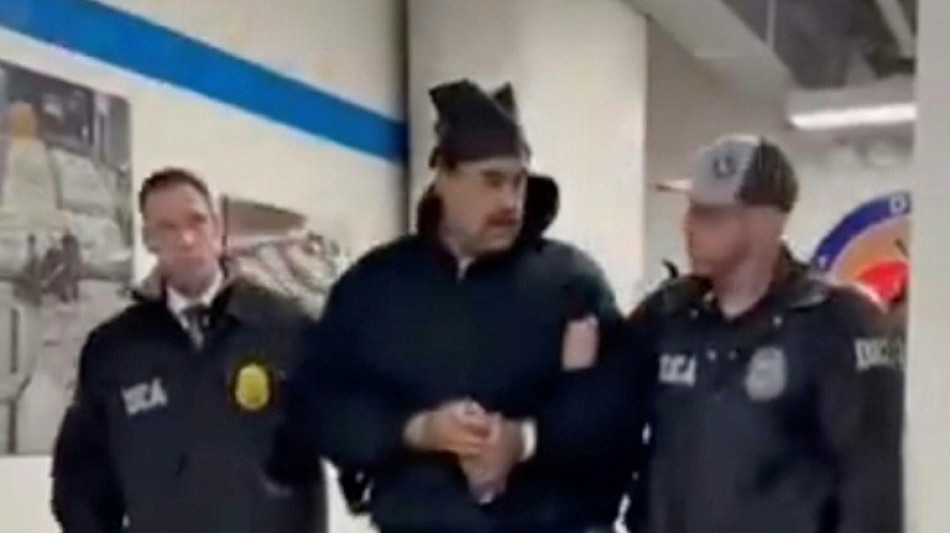
Deposed Venezuelan leader's court hearing starts in New York / Photo: © X account of Rapid Response 47/AFP

 London
 27 °C
27 °C

 Manchester
 21 °C
21 °C
 Glasgow
27 °C
Glasgow
27 °C
 Dublin
 19 °C
19 °C
 Belfast
15 °C
Belfast
15 °C
 Washington
23 °C
Washington
23 °C
 Denver
17 °C
Denver
17 °C
 Atlanta
22 °C
Atlanta
22 °C
 Dallas
 28 °C
28 °C
 Houston Texas
28 °C
Houston Texas
28 °C
 New Orleans
27 °C
New Orleans
27 °C
 El Paso
 25 °C
25 °C
 Phoenix
 29 °C
29 °C
 Los Angeles
16 °C
San Diego
18 °C
San Francisco
15 °C
Chicago
15 °C
Minneapolis
10 °C
Seattle
15 °C
Portland
17 °C
Salt Lake City
18 °C
Las Vegas
28 °C
Miami
28 °C
Jacksonville
26 °C
San Antonio
27 °C
Bermuda
25 °C
Nassau
21 °C
Iqaluit
7 °C
Yellowknife
12 °C
Anchorage
14 °C
Fairbanks
Los Angeles
16 °C
San Diego
18 °C
San Francisco
15 °C
Chicago
15 °C
Minneapolis
10 °C
Seattle
15 °C
Portland
17 °C
Salt Lake City
18 °C
Las Vegas
28 °C
Miami
28 °C
Jacksonville
26 °C
San Antonio
27 °C
Bermuda
25 °C
Nassau
21 °C
Iqaluit
7 °C
Yellowknife
12 °C
Anchorage
14 °C
Fairbanks
 14 °C
Barrow
7 °C
Calgary
7 °C
Edmonton
16 °C
Winnipeg
11 °C
Goose Bay
15 °C
Halifax
16 °C
Boston
18 °C
Ottawa
16 °C
Toronto
15 °C
Detroit
14 °C
Cleveland
13 °C
New York
22 °C
Baltimore
24 °C
Philadelphia
22 °C
Nuuk (Godthåb)
14 °C
Barrow
7 °C
Calgary
7 °C
Edmonton
16 °C
Winnipeg
11 °C
Goose Bay
15 °C
Halifax
16 °C
Boston
18 °C
Ottawa
16 °C
Toronto
15 °C
Detroit
14 °C
Cleveland
13 °C
New York
22 °C
Baltimore
24 °C
Philadelphia
22 °C
Nuuk (Godthåb)
 4 °C
Hong Kong
30 °C
Singapore
31 °C
Melbourne
27 °C
Canberra
9 °C
Adelaide
11 °C
Darwin
26 °C
Perth
14 °C
Fort Worth
28 °C
Honolulu
25 °C
Sydney
17 °C
Johannesburg
15 °C
Dubai
36 °C
Mumbai
4 °C
Hong Kong
30 °C
Singapore
31 °C
Melbourne
27 °C
Canberra
9 °C
Adelaide
11 °C
Darwin
26 °C
Perth
14 °C
Fort Worth
28 °C
Honolulu
25 °C
Sydney
17 °C
Johannesburg
15 °C
Dubai
36 °C
Mumbai
 31 °C
Zürich
32 °C
Tokyo
26 °C
Seoul
24 °C
Delhi
41 °C
Beijing
27 °C
Riyadh
40 °C
Prague
31 °C
Pennsylvania
19 °C
Valletta
26 °C
Manama
34 °C
Warsaw
25 °C
Stockholm
21 °C
31 °C
Zürich
32 °C
Tokyo
26 °C
Seoul
24 °C
Delhi
41 °C
Beijing
27 °C
Riyadh
40 °C
Prague
31 °C
Pennsylvania
19 °C
Valletta
26 °C
Manama
34 °C
Warsaw
25 °C
Stockholm
21 °C
Deposed Venezuelan president Nicolas Maduro appeared before a judge in New York on Monday two days after being seized in Caracas in a stunning US military operation that paves the way for Washington's plans to control the oil-rich country.
Maduro, 63, and his wife, Cilia Flores, were brought to the Manhattan courthouse under heavy guard to face a federal judge on narcotrafficking charges.
Outside, around 40 people protested against the US intervention, while a smaller group expressed support.
The pair were snatched by US commandos in the early hours of Saturday in an assault backed by warplanes and a heavy naval deployment.
In a series of shock announcements over the weekend, President Donald Trump declared that the United States is now running Venezuela with an eye to rebuilding and controling its huge but decrepit oil industry.
Amid international alarm, UN Secretary-General Antonio Guterres told an emergency UN Security Council meeting that there should be "respect for the principles of sovereignty, political independence and territorial integrity."
There was sharp criticism Monday from Mexico, where President Claudia Sheinbaum said the Americas "do not belong" to anyone.
Colombian President Gustavo Petro issued a fiery statement saying that as a former guerrilla fighter he was ready to "take up arms" against Trump.
Maduro became president in 2013, taking over from his equally hardline socialist predecessor Hugo Chavez.
The United States and European Union say he stayed in power by rigging elections and imprisoning opponents, while overseeing rampant corruption.
The end to a quarter century of leftist rule leaves Venezuela's approximately 30 million people facing uncertainty.
Some 2,000 Maduro supporters, including rifle-wielding men on motorcycles, rallied Sunday in Caracas, waving Venezuelan flags.
On Monday, deputies in the Venezuelan parliament shouted "let's go Nico!" in support for the ousted leader.
For now, though, the Trump administration is indicating it wants continuity with the remainder of Maduro's entourage -- provided they submit to US demands.
Interim president Delcy Rodriguez, who was Maduro's vice president, dropped an initially defiant posture on Sunday, saying she was ready for "cooperation."
Trump has made clear there is no appetite for helping opposition candidates previously seen as the rightful winners of rigged elections to take power.
- 'Need access to oil' -
When asked what he needs from interim leader Rodriguez, Trump said: "We need total access. We need access to the oil and other things in their country that allow us to rebuild their country."
Venezuela has the world's largest proven oil reserves. However the oil is difficult and expensive to produce and after years of international sanctions and mismanagement, the infrastructure is in poor shape.
Shares in US oil majors Chevron, ExxonMobil and ConocoPhillips shares surged on Wall Street early Monday.
Trump, who has shocked many Americans with his unprecedented moves to accumulate domestic power, also now appears increasingly emboldened in foreign policy.
On Sunday, he said communist Cuba was "ready to fall" and he repeated that Greenland, which is part of US ally Denmark, should be controlled by the United States.
He has lashed out at Colombia's Petro, saying he should "watch his ass."
Although there are no known US troops in Venezuela now, the Trump administration says it retains powerful economic leverage through an oil blockade. Trump has also threatened additional military attacks.
A huge US naval presence, including an aircraft carrier, is deployed in the Caribbean.
Details of the US operation in Caracas were still emerging Monday, with Havana saying 32 Cubans were killed in the attack. No US service members were killed but some were wounded, according to US officials.
Protesting outside the New York court, leftist activist Sydney Loving, 31, said she stood "with the people of Venezuela."
"We say no to US wars. We say no to US intervention. It's not in our benefit. It does not make the US safer, it makes it makes the people on Wall Street richer," she told AFP.
However, Angel Montero, who moved to the United States from Venezuela, described the downfall of Maduro as "the best gift I ever received."
"I'm going to thank Donald Trump," Montero, 36, said.
burs-sms/bgs
A.Uhm--SG