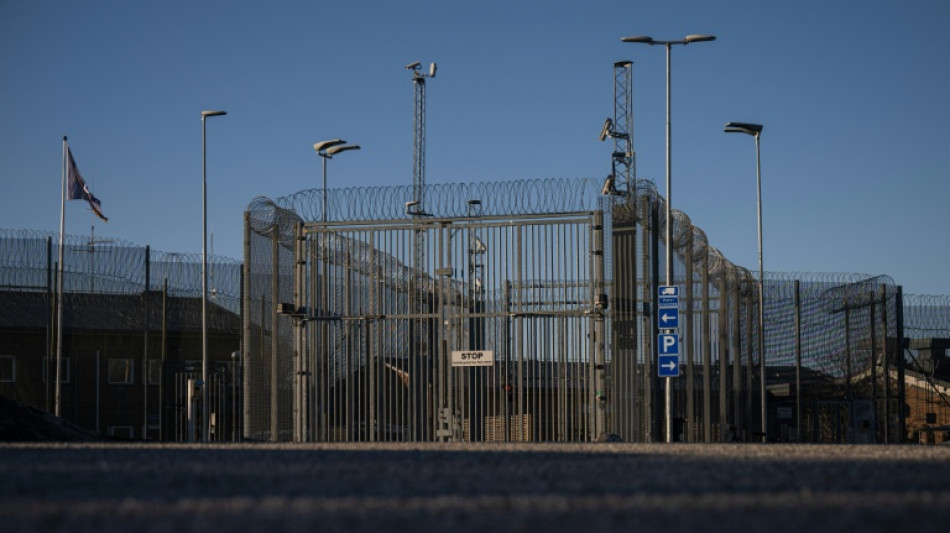
Sweden withdraws disputed proposal to jail 13-year-olds / Photo: © AFP

 London
 21 °C
21 °C

 Manchester
18 °C
Manchester
18 °C
 Glasgow
21 °C
Glasgow
21 °C
 Dublin
 17 °C
17 °C
 Belfast
17 °C
Belfast
17 °C
 Washington
 22 °C
22 °C
 Denver
 23 °C
23 °C
 Atlanta
26 °C
Atlanta
26 °C
 Dallas
31 °C
Dallas
31 °C
 Houston Texas
29 °C
Houston Texas
29 °C
 New Orleans
30 °C
New Orleans
30 °C
 El Paso
27 °C
El Paso
27 °C
 Phoenix
32 °C
Phoenix
32 °C
 Los Angeles
 21 °C
San Diego
21 °C
San Francisco
14 °C
Chicago
22 °C
Minneapolis
21 °C
Seattle
15 °C
Portland
18 °C
Salt Lake City
26 °C
Las Vegas
31 °C
Miami
31 °C
Jacksonville
27 °C
San Antonio
27 °C
Bermuda
29 °C
Nassau
21 °C
Iqaluit
10 °C
Yellowknife
9 °C
Anchorage
21 °C
San Diego
21 °C
San Francisco
14 °C
Chicago
22 °C
Minneapolis
21 °C
Seattle
15 °C
Portland
18 °C
Salt Lake City
26 °C
Las Vegas
31 °C
Miami
31 °C
Jacksonville
27 °C
San Antonio
27 °C
Bermuda
29 °C
Nassau
21 °C
Iqaluit
10 °C
Yellowknife
9 °C
Anchorage
 12 °C
Fairbanks
14 °C
Barrow
4 °C
Calgary
12 °C
Edmonton
23 °C
Winnipeg
17 °C
Goose Bay
20 °C
Halifax
19 °C
Boston
20 °C
Ottawa
20 °C
Toronto
21 °C
Detroit
23 °C
Cleveland
22 °C
New York
22 °C
Baltimore
22 °C
Philadelphia
22 °C
Nuuk (Godthåb)
10 °C
Hong Kong
28 °C
Singapore
12 °C
Fairbanks
14 °C
Barrow
4 °C
Calgary
12 °C
Edmonton
23 °C
Winnipeg
17 °C
Goose Bay
20 °C
Halifax
19 °C
Boston
20 °C
Ottawa
20 °C
Toronto
21 °C
Detroit
23 °C
Cleveland
22 °C
New York
22 °C
Baltimore
22 °C
Philadelphia
22 °C
Nuuk (Godthåb)
10 °C
Hong Kong
28 °C
Singapore
 29 °C
Melbourne
28 °C
Canberra
7 °C
Adelaide
12 °C
Darwin
26 °C
Perth
15 °C
Fort Worth
30 °C
Honolulu
24 °C
Sydney
14 °C
Johannesburg
26 °C
Dubai
39 °C
Mumbai
29 °C
Zürich
17 °C
Tokyo
29 °C
Melbourne
28 °C
Canberra
7 °C
Adelaide
12 °C
Darwin
26 °C
Perth
15 °C
Fort Worth
30 °C
Honolulu
24 °C
Sydney
14 °C
Johannesburg
26 °C
Dubai
39 °C
Mumbai
29 °C
Zürich
17 °C
Tokyo
 27 °C
Seoul
26 °C
Delhi
34 °C
Beijing
27 °C
Seoul
26 °C
Delhi
34 °C
Beijing
 28 °C
Riyadh
42 °C
Prague
26 °C
Pennsylvania
20 °C
Valletta
32 °C
Manama
36 °C
Warsaw
24 °C
Stockholm
17 °C
28 °C
Riyadh
42 °C
Prague
26 °C
Pennsylvania
20 °C
Valletta
32 °C
Manama
36 °C
Warsaw
24 °C
Stockholm
17 °C
Sweden's right-wing government withdrew Thursday a heavily-contested proposal to lower the age at which children can be sentenced to prison from 15 to 13, citing a lack of support in parliament.
Justice Minister Gunnar Strommer said the government would present a revised proposal within weeks lowering the age to 14. He said he expected parliament to approve the measure by August.
The minority government, backed by the far-right Sweden Democrats, has made the fight against crime a top priority since coming to power in 2022.
"Things are a bit uncertain in parliament, and that is why we have decided to act responsibly in this situation by making the decision this morning to withdraw this bill," Strommer told reporters.
The proposal, which parliament had been due to vote on on June 15, had been met with fierce criticism in a country known for championing children's rights.
A majority of the 126 authorities and organisations the government consulted before presenting the bill were critical or opposed the measure, including the police and the prison service.
A government-appointed commissioner had recommended lowering the age to 14 for serious offences, but the government had chosen to go a step further to 13.
Sweden's main opposition Social Democrats are in favour of lowering the age to 14.
"I think most feel more comfortable with 14," Strommer said.
The Scandinavian country has been rocked by violent organised crime for more than a decade, linked primarily to battles between gangs and the drug market.
The loosely-formed networks have increasingly recruited under-15s, often online, to carry out bombings and shootings, knowing they would not face prison time if caught.
Eight existing prisons have been tasked with preparing special sections for children, where they will be kept separate from adult inmates.
Currently, most minors found guilty of serious crimes are not sentenced to prison.
They are usually ordered into detention facilities, SiS homes, tasked with mandatory care and rehabilitation, rather than a punitive system like prison.
However, many SiS homes have in recent years become recruiting bases for criminal networks.
The government is trying to rapidly push through reforms in various areas, ahead of legislative elections in September.
M.Joo--SG