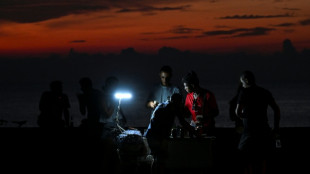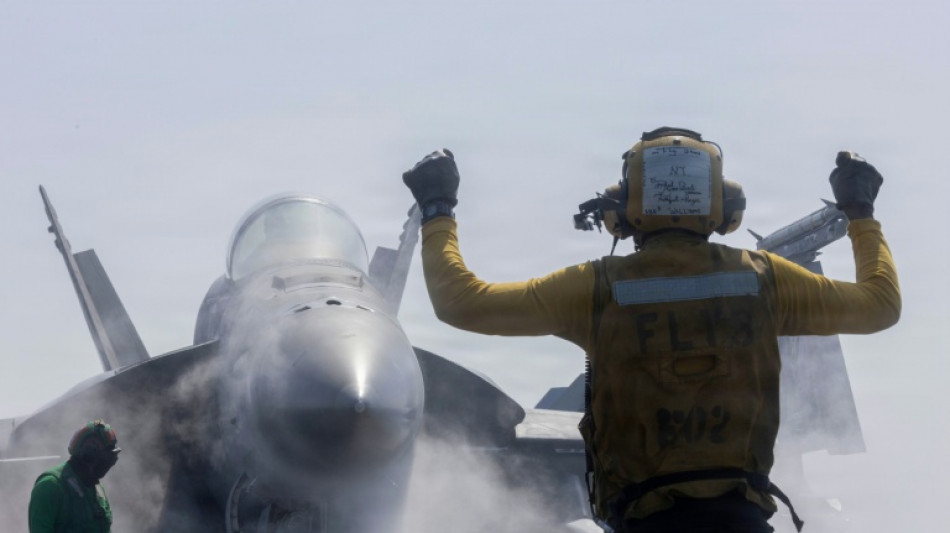
Crude soars, stocks drop after US strikes on Iran / Photo: © US NAVY/US CENTRAL COMMAND/AFP

 London
 27 °C
27 °C

 Manchester
 20 °C
20 °C
 Glasgow
15 °C
Glasgow
15 °C
 Dublin
 19 °C
19 °C
 Belfast
16 °C
Belfast
16 °C
 Washington
28 °C
Washington
28 °C
 Denver
 32 °C
32 °C
 Atlanta
34 °C
Atlanta
34 °C
 Dallas
37 °C
Dallas
37 °C
 Houston Texas
35 °C
Houston Texas
35 °C
 New Orleans
33 °C
New Orleans
33 °C
 El Paso
35 °C
El Paso
35 °C
 Phoenix
43 °C
Phoenix
43 °C
 Los Angeles
28 °C
San Diego
26 °C
San Francisco
15 °C
Chicago
28 °C
Minneapolis
28 °C
Seattle
23 °C
Portland
26 °C
Salt Lake City
33 °C
Las Vegas
41 °C
Miami
33 °C
Jacksonville
36 °C
San Antonio
35 °C
Bermuda
29 °C
Nassau
21 °C
Iqaluit
13 °C
Yellowknife
22 °C
Anchorage
Los Angeles
28 °C
San Diego
26 °C
San Francisco
15 °C
Chicago
28 °C
Minneapolis
28 °C
Seattle
23 °C
Portland
26 °C
Salt Lake City
33 °C
Las Vegas
41 °C
Miami
33 °C
Jacksonville
36 °C
San Antonio
35 °C
Bermuda
29 °C
Nassau
21 °C
Iqaluit
13 °C
Yellowknife
22 °C
Anchorage
 19 °C
Fairbanks
22 °C
Barrow
19 °C
Fairbanks
22 °C
Barrow
 15 °C
Calgary
25 °C
Edmonton
31 °C
Winnipeg
23 °C
Goose Bay
28 °C
Halifax
19 °C
Boston
18 °C
Ottawa
29 °C
Toronto
28 °C
Detroit
29 °C
Cleveland
27 °C
New York
22 °C
Baltimore
27 °C
Philadelphia
24 °C
Nuuk (Godthåb)
9 °C
Hong Kong
27 °C
Singapore
15 °C
Calgary
25 °C
Edmonton
31 °C
Winnipeg
23 °C
Goose Bay
28 °C
Halifax
19 °C
Boston
18 °C
Ottawa
29 °C
Toronto
28 °C
Detroit
29 °C
Cleveland
27 °C
New York
22 °C
Baltimore
27 °C
Philadelphia
24 °C
Nuuk (Godthåb)
9 °C
Hong Kong
27 °C
Singapore
 29 °C
Melbourne
32 °C
Canberra
29 °C
Melbourne
32 °C
Canberra
 1 °C
Adelaide
11 °C
Darwin
23 °C
Perth
11 °C
Fort Worth
37 °C
Honolulu
25 °C
Sydney
11 °C
Johannesburg
10 °C
Dubai
31 °C
Mumbai
1 °C
Adelaide
11 °C
Darwin
23 °C
Perth
11 °C
Fort Worth
37 °C
Honolulu
25 °C
Sydney
11 °C
Johannesburg
10 °C
Dubai
31 °C
Mumbai
 28 °C
Zürich
23 °C
Tokyo
22 °C
Seoul
25 °C
Delhi
33 °C
Beijing
24 °C
Riyadh
34 °C
Prague
22 °C
Pennsylvania
26 °C
Valletta
26 °C
Manama
34 °C
Warsaw
18 °C
Stockholm
13 °C
28 °C
Zürich
23 °C
Tokyo
22 °C
Seoul
25 °C
Delhi
33 °C
Beijing
24 °C
Riyadh
34 °C
Prague
22 °C
Pennsylvania
26 °C
Valletta
26 °C
Manama
34 °C
Warsaw
18 °C
Stockholm
13 °C
Oil prices soared and stocks fell in Asia on Monday after US-Israeli strikes on Iran sent investors fleeing the prospect of an extended conflict in the crude-rich Middle East.
Brent briefly spiked almost 14 percent and West Texas Intermediate nearly 12 percent at the start of business after the attack on the Islamic Republic, which killed supreme leader Ayatollah Ali Khamenei and other senior officials.
The bombings have also seen the vital Strait of Hormuz -- through which around 20 percent of global seaborne oil passes -- effectively shut and several ships attacked, fanning supply fears.
Equity markets across Asia sank, with Tokyo, Hong Kong, Singapore, Wellington and Taipei all deep in the red. US futures were down more than one percent.
However, energy firms rallied, with Australia's Woodside Energy jumping more than five percent and Santos climbing nine percent, while PetroChina added almost four percent in Hong Kong. Inpex in Japan was up more than 10 percent.
Gold -- a key go-to safe haven in times of turmoil -- climbed two percent.
While the strikes have ramped up geopolitical worries, traders wound down their initial bets, with crude sitting around five percent higher and stock markets paring losses.
Brent, the international benchmark for crude, had already rallied last week on growing concerns Trump would order an attack as talks aimed at curtailing Iran's nuclear programme stuttered.
"If higher oil prices persist, it raises the risk of stickier headline inflation and can slow the pace at which inflation prints improve," wrote Saxo Markets' Charu Chanana.
"That does not automatically mean policy tightening, but it can make the Fed more cautious about cutting quickly, because energy-driven inflation can spill into expectations and broader pricing behaviour over time."
The US president has called on Iranians to rise up against their government and said the war could last "four weeks".
Iran's retaliatory missile and drone campaign in the Gulf killed four people and wounded dozens more, the UAE foreign ministry said.
While Iran has not officially closed the Strait of Hormuz, its Revolutionary Guards have warned against transiting the waterway.
- Trump's 'Achilles heel' -
On Sunday, at least two ships were struck, one off Oman's coast and another off the UAE's, British maritime security agency UKMTO said.
Iranian state television said an oil tanker was struck and was sinking after trying to "illegally" pass through the strait.
In such a situation, insurance costs become prohibitive, said Amena Bakr, head of Middle East and OPEC+ research at analysts Kpler, predicting that the price could hit $90.
The main shipping companies have already confirmed that they are suspending the passage of their fleets along the route.
"While some alternate infrastructure could be used to bypass the Strait of Hormuz, the net impact from its closure would be a loss of eight to 10 million bpd (barrels per day) of crude oil supply," said Jorge Leon, an analyst with Rystad Energy, in a note on Saturday.
In theory, oil-importing countries have reserves, with OECD members required to maintain 90 days' worth of stocks, but prices above $100 cannot be ruled out.
If the blockade of the Strait of Hormuz continues, "no matter how much spare capacity (in the strategic reserves) is not going to fill that gap. That gap is just too big", said Bakr.
Another analyst at Kpler, Michelle Brouhard, described high oil prices as "the Achilles heel of Trump".
In her view, Iran is likely to look to keep crude prices high to force Trump to back down, as he promised his electorate low prices, at a time when the United States is already gearing up for mid-term elections at the end of this year.
Gas prices also soared Monday -- dealing another blow to the world economy -- as Qatar is a key exporter of liquefied natural gas, heightening inflationary risks.
The last time crude prices climbed above $100 was at the start of the war in Ukraine. Gas also soared, which played a major role in a prolonged period of rising prices.
Rising energy prices, increased shipping costs and loss of revenue for air transport could have "a harmful effect on growth", said economist Eric Dor, from the IESEG School of Management in Paris.
"If it's a matter of three days, it's not serious. But if it's over a longer period, then it will have an additional recessionary effect," he told AFP.
- Key figures at around 0200 GMT -
West Texas Intermediate: UP 4.2 percent at $69.84 per barrel
Brent North Sea Crude: UP 4.7 percent at $76.32 per barrel
Tokyo - Nikkei 225: DOWN 1.4 percent at 58,001.38
Hong Kong - Hang Seng Index: DOWN 1.9 percent at 26,130.70
Shanghai - Composite: UP 0.3 percent at 4,173.75
Euro/dollar: DOWN at $1.1790 from $1.1823 on Friday
Pound/dollar: DOWN at $1.3447 from $1.3486
Dollar/yen: UP at 156.26 yen from 156.03 yen
Euro/pound: DOWN at 87.65 pence from 87.67 pence
New York - Dow: DOWN 1.1 percent at 48,977.92 (close)
London - FTSE 100: UP 0.6 percent at 10,910.55 (close)
X.Ahn--SG