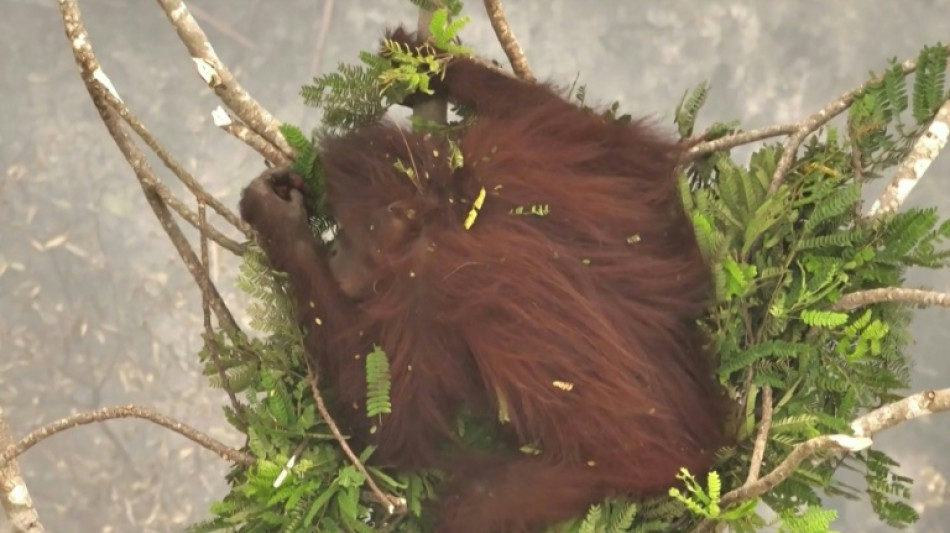
Indonesia releases eight orangutans rescued from fires to protected forest / Photo: © BORNEO ORANGUTAN SURVIVAL FOUNDATION/AFP

 London
 9 °C
9 °C

 Manchester
8 °C
Manchester
8 °C
 Glasgow
8 °C
Glasgow
8 °C
 Dublin
9 °C
Dublin
9 °C
 Belfast
7 °C
Belfast
7 °C
 Washington
18 °C
Washington
18 °C
 Denver
18 °C
Denver
18 °C
 Atlanta
 18 °C
18 °C
 Dallas
23 °C
Dallas
23 °C
 Houston Texas
23 °C
Houston Texas
23 °C
 New Orleans
19 °C
New Orleans
19 °C
 El Paso
23 °C
El Paso
23 °C
 Phoenix
 24 °C
24 °C
 Los Angeles
23 °C
San Diego
19 °C
San Francisco
13 °C
Chicago
17 °C
Minneapolis
23 °C
Seattle
8 °C
Portland
7 °C
Salt Lake City
20 °C
Las Vegas
23 °C
Miami
28 °C
Jacksonville
25 °C
San Antonio
24 °C
Bermuda
25 °C
Nassau
14 °C
Iqaluit
-2 °C
Yellowknife
Los Angeles
23 °C
San Diego
19 °C
San Francisco
13 °C
Chicago
17 °C
Minneapolis
23 °C
Seattle
8 °C
Portland
7 °C
Salt Lake City
20 °C
Las Vegas
23 °C
Miami
28 °C
Jacksonville
25 °C
San Antonio
24 °C
Bermuda
25 °C
Nassau
14 °C
Iqaluit
-2 °C
Yellowknife
 5 °C
Anchorage
7 °C
Fairbanks
1 °C
Barrow
-2 °C
Calgary
5 °C
Anchorage
7 °C
Fairbanks
1 °C
Barrow
-2 °C
Calgary
 0 °C
Edmonton
15 °C
Winnipeg
11 °C
Goose Bay
9 °C
Halifax
0 °C
Edmonton
15 °C
Winnipeg
11 °C
Goose Bay
9 °C
Halifax
 6 °C
Boston
8 °C
Ottawa
7 °C
Toronto
12 °C
Detroit
17 °C
Cleveland
15 °C
New York
15 °C
Baltimore
18 °C
Philadelphia
16 °C
Nuuk (Godthåb)
0 °C
Hong Kong
6 °C
Boston
8 °C
Ottawa
7 °C
Toronto
12 °C
Detroit
17 °C
Cleveland
15 °C
New York
15 °C
Baltimore
18 °C
Philadelphia
16 °C
Nuuk (Godthåb)
0 °C
Hong Kong
 31 °C
Singapore
33 °C
Melbourne
26 °C
Canberra
23 °C
Adelaide
31 °C
Singapore
33 °C
Melbourne
26 °C
Canberra
23 °C
Adelaide
 24 °C
Darwin
34 °C
Perth
20 °C
Fort Worth
22 °C
Honolulu
25 °C
Sydney
24 °C
Johannesburg
18 °C
Dubai
37 °C
Mumbai
36 °C
Zürich
10 °C
Tokyo
27 °C
Seoul
24 °C
Darwin
34 °C
Perth
20 °C
Fort Worth
22 °C
Honolulu
25 °C
Sydney
24 °C
Johannesburg
18 °C
Dubai
37 °C
Mumbai
36 °C
Zürich
10 °C
Tokyo
27 °C
Seoul
 28 °C
Delhi
28 °C
Delhi
 31 °C
Beijing
25 °C
Riyadh
32 °C
Prague
9 °C
Pennsylvania
14 °C
Valletta
25 °C
Manama
33 °C
Warsaw
11 °C
Stockholm
8 °C
31 °C
Beijing
25 °C
Riyadh
32 °C
Prague
9 °C
Pennsylvania
14 °C
Valletta
25 °C
Manama
33 °C
Warsaw
11 °C
Stockholm
8 °C
Eight orangutans rescued in recent weeks from blazes that tore through Borneo island have been released into a protected forest, Indonesian authorities and rescuers said on Sunday.
The apes were saved from several locations razed by fires -- mostly plantations near their forest homes -- in the West Kalimantan province on the Indonesian side of Borneo last month, the forestry ministry and the YIARI wildlife rehabilitation foundation said in a statement.
The orangutans, three mom and baby pairs as well as two male teenagers, were relocated on Friday to the Batu Nyambu Protected Forest in West Kalimantan, a 23,000-hectare reserve with primary and secondary forest cover.
YIARI CEO Karmele Llano Sanchez said relocating the animals to a new location was a "necessary step" when their habitat was no longer safe.
"Protection of habitats will always be a top priority to ensure orangutans continue to have safe forests to live in, but as long as their habitat remains threatened, rescue is one of the best options we can take to help them survive," Sanchez said.
The reserve was chosen due to availability of food and water sources as well as its connectivity to other forests, said YIARI operational director Argitoe Ranting.
"We want to ensure that rescued orangutans are not simply moved from one place to another, but actually have a chance to survive in their natural habitat," Argitoe said.
Indonesian authorities and YIARI rescued 46 orangutans from threats of fires between August and October 9, local natural resources agency head Murlan Dameria Pane said.
Orangutans are critically endangered, and around 104,000 orangutans remain in Borneo and Sumatra, down from more than 230,000 a century ago, according to conservation group WWF.
Last month, the International Union for Conservation of Nature warned fires were burning in habitats containing 52 percent of Borneo's orangutan population.
Indonesia regularly battles wildfires during the dry season, but the fires have intensified this year because of the El Nino weather phenomenon, set to be one of the strongest since comparable records began four decades ago.
Experts have also pointed to slash-and-burn land-clearing practices that have changed the naturally fire-resistant landscape.
The fires have created severe haze locally, with tens of thousands of cases of respiratory illnesses, and also caused regional air pollution spikes in Singapore and Malaysia.
Y.Wi--SG